
Archives |
|
| Complementary and alternative medicine for EU citizens | 5 October 2011 |
Dr Ton Nicolai, on behalf of CAMDOC, the alliance of the European CAM physicians' organisations: "Complementary and alternative medicine (CAM) is becoming increasingly popular in Europe, with up to 65% of the population reporting that they have used this form of medicine. The main reasons given for using CAM are its holistic approach, effectiveness and orientation towards promoting health rather than controlling symptoms." |
|
| Lithuanians fall in love quicker than Americans | 24 August 2011 |
An interesting study I first noticed on livescience.com told of a study jointly conducted by the State University of New York at New Paltz and Russia's Moscow State University for the Humanities found that Lithuanians and Russians fall in love much quicker than their American counterparts.
The study tried to find if love was a universally uniform concept throughout the world. The US and Russia were chosen because for so long they were seen as being at total odds with each other, and Lithuania was included because the researchers thought that perhaps Lithuania might represent a halfway point between the two cultures. The initial results were deduced from a survey of 1157 adults from the US, Russia and Lithuania where participants were asked to respond to 14 different statements about love. The study found that about 90% of Lithuanians and Russians fall in love within a month, and 39% of those fell in love within a few days. On the other side of the pond 58% of Americans said it took between two months and a year to fall in love. One finding these and other differences they undertook a further poll where they asked 40 males and 40 females from each country to write down all the things they associated with love, and these findings were further integrated into the study. The top ranking answers of what each nationality wrote had a few surprises and can be seen below:
From these replies, coupled with the initial findings the researchers found, using various statistical methods, that one significant difference across the pond is that Americans frequently stated friendship as a major element of romantic love, while Russians and Lithuanians rarely mentioned it, and Russians and Lithuanians viewed romantic love as a temporary and inconsequential state, even one of madness, while Americans saw it as an ongoing union. The Europeans in the sample saw love as an unreal state, while Americans regarded it as a real state. The study also found that Lithuanians and Russians are more poetic about love, while the Americans are more pragmatic. Lithuanians and Russians often regard friendship as a possible outcome of romantic love while Americans see it as an important aspect from the beginning. This led the researchers to conclude:
The full report is available from Cross Cultural Research at: http://ccr.sagepub.com/content/45/2/128.full.pdf+html |
|

| Capital Days in Vilnius | 23 August 2011 |
The first weekend of September in Vilnius is traditionally dedicated to Capital Days (Sostinės dienos). For the seventeenth year organisers have put together an exciting range of free concerts, performances and exhibitions which will take place alongside the usual fair. As last year, Gedimino Ave will be re-named Humming Avenue (Dūzgiantis prospektas) for the weekend. The main artery of Vilnius gets this name because of the buzz that will be generated by about 100 different events to take place over the three days. The main concerts of Capital Days will be held in the most central square of the old town – Cathedral Square. During the opening concert the well known, but always fresh, Lithuanian band Empti will perform. The headline act for opening night will be Gus Gus from Iceland. Gus Gus is almost as famous as the other well-known Icelander Bjork. Next evening on the stage of Cathedral Square will be the Lithuanian BrassBastardz who are promising a very hot performance. These guys won the prestigious People's Music Awards this year. On the same stage music lovers will also see Club Des Belugas from Germany – who must be rated as the biggest stars of this year Capital Days. And on the last night for the closing concert the Lithuanian State Symphonic Orchestra together with Lithuanian opera singers will perform arias from Eugene Onegin, Bohemia, The magic Flute and Sweeney Todd. Many other events are also planned, like an open air cinema in a Town Hall Square, and of course with Eurobasket2011 taking place at the same time there will be plenty of large screens available to watch and cheer the Lithuanian basketball team. |
|
| Eurobasket2011 joins Invite Your Friend to Lithuania | 29 July 2011 |
Invite Your Friend to Lithuania is an initiative established by Global Lithuanian Leaders and this week EuroBasket2011 also joined the ranks.
The idea behind Invite Your Friend to Lithuania is simple: It asks Lithuanians, and especially those living abroad, to make a point of inviting friends and family to Lithuania. Working on word of mouth more than an official advertising campaign, a number of businesses have got behind the program and donated goods and services to make Lithuania a more attractive destination than ever. “Our objective is to invite a record number of guests to visit Lithuania, and in doing so to encourage tourism in Lithuania. This initiative is directed towards Lithuanians living abroad and at home, people who have already visited Lithuania, and those who are hearing about the country for the first time. We are pleased that other business partners have joined the campaign to help motivate Lithuanians and foreigners to take part in this initiative,” said Dalia Venslovaite, project organizer and director of Global Lithuanian Leaders.
“Every person who visits Lithuania becomes an ambassador, someone who will share their experiences and memories with others. The European Basketball Championship which will take place in Lithuania from 31 August to 19 September 2011 will make the country even better known and encourage more tourism. We’re hoping that this partnership with Invite Your Friend to Lithuania will attract even more people to Lithuania,” said Mindaugas Spokas, director organizing committee Eurobasket 2011. Linas Kleiza and Jurgis Didziulis were also at the press conference and are keen supporters of the project. “I think that all those who come to visit Lithuania during the European Basketball Championship will find that our small country has a lot of strength in its people. Surely everyone can invite at least one friend living abroad and show them the best that Lithuania has to offer; great basketball energy, many entertainment events, warm people and beautiful nature,” said Linas Kleiza who plays for the Toronto Raptors in the NBA. According to Jurgis Didziulis, Lithuanians living abroad take a large part in inviting others to visit the country. The musician, who is originally from Columbia, said that he often shares stories about Lithuania with his friends. Many of his friends have already come, visited and fully enjoyed Lithuania. In fact he had trouble getting some of them to leave. “Sharing your personal stories about Lithuania with friends has a far more powerful effect in inviting others to visit than any informational tourism booklet. Also, everyone uses different Lithuanian identification symbols that best convey the culture of Lithuania,” said Jurgis Didziulis. The first stage of the campaign started on 1 July and continues through to 1 October 2011. During this time participants have the chance to win various prizes ranging from movie tickets to free flight tickets to Lithuania as airBaltic announced that they will be giving away 200 tickets to Eurobasket2011. Those who would like to join the initiative are welcome to register at www.invite2lithuania.com or through the Facebook page and help invite more of their friends to Lithuania. Those registered can win prizes and tickets from: airBaltic, Eurobasket2011, Pasaka, Dalia Ibelhauptaite’s theatre group Bohemieciai, Kristupo summer festival, Smile Balloons hot air balloon rides, Lithuanian Scented candles, and t-shirts from Trys Milijonai. Special discounts are also available from Shakespeare Hotel, Baltic- American Clinic, EXIT nightclub and for the video Unseen Lithuania. Information partners are delfi.lt and IQ The Economist. Other partners of this initiative include; Lithuanian Business Confederation ICC Lithuania, Vilnius Tourism Informational Center and Convention Bureau UAB MAMAreklama. For more information please contact the director of Global Lithuanian Leaders at dalia@lithuanianleaders.org, + 370 6 87 55886, or www.lithuanianleaders.org |
|


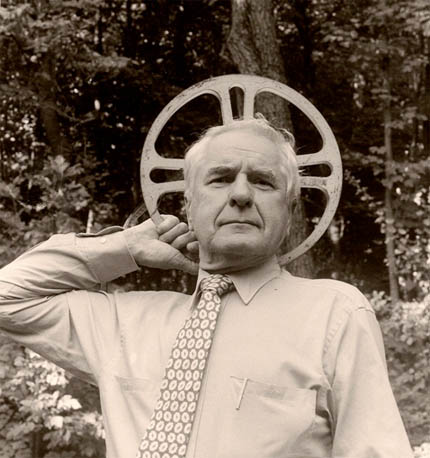
| Adolfas Mekas dies at 85 | 3 June 2011 |
Sad news that Adolfas Mekas died at age 85 of heart failure, his wife Pola Chapelle confirmed.
Born in Semeniskiai 30 September 1925, Adolfas left Lithuania with his brother Jonas towards the end of World War II only to be captured by the Germans and held in a labour camp for the duration. Moving among refugee camps after war's end, he attended university in Mainz and waited patiently for passage to the USA. The brothers were intending to make the usual Lithuanian pilgrimage to Chicago but having landed in New York with $10 between them, both were said to have looked at each other and known straight away that their destiny lay in the Big Apple. Having embraced an intellectual lifestyle in Germany the brothers were then immersed in the bohemia of 50s and 60s New York where they flourished, and established Film Culture, an influential film magazine which was one of the first to look on filmmaking as a serious artistic form and included contributors such as Andrew Sarris, Stan Brakhage, Richard Leacock, Rudolf Arnheim, Arlene Croce and Peter Bogdanovich. The Mekas brothers also established the Filmmakers' Cooperative, an independent cinema distribution house owned by artists. Mekas was associated with the Fluxus movement and participated in the first Fluxus performance in 1961. Though Jonas became the better known brother, both were influential avant-garde filmmakers, Adolfas' best known film is the well regarded Hallelujah the Hills released in the early 1960s. Adolfas went into teaching and was a founding member of the Bard College film department where he taught from 1971 - 2004, though he never stopped making films and at the time of his death was working on a film about Italian Giordano Bruno. Adolfas, professor emeritus, is survived through his wife Pola Chapelle, brothers Jonas and Costas, who lives in Semeniskiai, and son Sean. A man of humour, intellect and passion, Adolfas will be sorely missed and widely grieved. |
|
| US Releases Annual Human Rights Report | 30 May 2011 |
On 8 April, the US Department of State released its 2010 Country Reports on Human Rights Practices in more than 190 countries around the world. The reports are presented before the US Congress and Senate and serve as a reference for future foreign and economic policy developments. US law requires an annual update of information on human rights practices in various world countries, which becomes decisive for future economic cooperation. The general overview of the situation stresses a rapid increase in the number of organisations working for strengthening democracy and human rights protection. On the other hand, regret is expressed as the states’ policies are often more concerned with creating legal barriers and providing poor (or non-existent) funding rather than establishing a dialogue with NGOs. The report on Lithuania places the emphasis on prison and detention conditions, which currently do not meet international standards: the number of justified complaints from prisoners is increasing as regards the conditions of detention, degrading their privacy and dignity; three institutions remain overcrowded; the standards of hygiene are often below the requirements. Concern is expressed in the report that even though homosexuality is no longer criminalized, and official discrimination of sexual minorities is not recorded, public perceptions of homosexuals remain negative. It can be judged by increasing amount of hate speech on the internet, the events surrounding Baltic Pride 2010 on 8 May, 2010, and the circumstances of the adoption of the Act of Protection of Minors against Detrimental Effect of Public Information. The report draws attention to the problems of Roma ethnic minority, especially discrimination in education, housing, health care and labour market. It also stresses high level of domestic violence against women and children. See the full text of the 2010 Country Human Rights Report on Lithuania. |
|
| Free and happy people should live in Tibet | 2 May 2011 |
Dr. Laima Liucija Andrikienė I met His Holiness the Dalai Lama for the first time in 1991 when he came to Lithuania to express his support for Lithuania's recently re-established independence, for the free Republic of Lithuania. As one of the organizers of that visit I had the privilege back then to accompany His Holiness to Vilnius orphanage, the Cathedral of Vilnius, to a number of meetings with politicians, scientists and the wider society. Since then I became involved in the Tibet support campaign and I am sure this engagement is for life - until I see free Tibet and happy Tibetans. Lithuania was occupied by the Soviet Union in 1940. In 1950-1951 Tibet was illegally occupied by the PRC following Chinese "cultural revolution". Being inspired by the Tibetan fight for freedom, which I found being similar to the fight of Lithuanian nation for our freedom, I organized the Second World Parliamentary Convention on Tibet, held from March 26-28, 1995, in Vilnius, Lithuania. For more than 20 last years I have consistently supported the plight of the Dalai Lama and all Tibetan people for their freedom and their rights. I have met His Holiness many times in different countries and places - Brussels, Dharamsala, Vilnius, Edinburgh, etc. - and on various occasions. Each meeting was very memorable and special. I have known His Holiness not only as a spiritual leader or a public figure but also as a human being - very warm, sensitive and compassionate, someone who can communicate with people, even very small children, without words but on an emotional, spiritual level. His Holiness the Dalai Lama is a man of peace. He has consistently advocated policies of non-violence, even in the face of extreme aggression. The European Parliament every year grants a Sakharov Prize for the freedom of thought to human rights defenders from around the world. In my opinion His Holiness deserves to get this prize every time since his contribution to world peace, human rights and human dignity is immeasurable. From the political point of view, I have been a witness on how the position of His Holiness has changed throughout time. When I met him for the first time, he was speaking about the independence of Tibet. Later with time he adopted a more moderate position and spoke about Tibet's autonomy, especially cultural, within the People's Republic of China. In recent years His Holiness stood firmly behind the proposal to have genuine democratic elections in Tibet and democratically elected self-government. Together with His Holiness I wish to see the Tibetan plateau becoming a demilitarized zone, free of arms, military installations, nuclear-free, environment-friendly for the benefit of the whole mankind and in the interests of future generations. The roof of the world has to be peaceful and free, and happy people should live there - the people of Tibet. |
|
| Schools urged to help save lives on roads | 18 April 2011 |
In Lithuania, on 6 April 2011, the commemoration day of road safety, the Ministry of Transport and Communications urged all schools to pay more attention to the education of young traffic participants. Schools are invited to sign the European Road Safety Charter and to join the largest traffic safety community in Europe. The joint objective of signatories – to halve the number of road accident victims in the period of the coming nine years. |
|
| Eurovision finalists selected | 21 February 2011 |
Over three semi finals aired on LRT, the Lithuanian public and a special jury have chosen nine qualifiers for the grand Lithuanian final. According to the official Lithuanian Eurovision Song Contest website www.zebra.lt, four more wildcards were added to the final line up - one of chosen by the website readers and three others chosen by the LRT jury. The complete list of candidates for Eurovision Song Contest 2011 are: The Lithuanian final will take place on February 24 at 20:15 CET. It will be held at the LRT studio and hosted by Giedrius Masalskis. |
|
| Denmark Donates €75,000 to the EHU Emergency Fund | 9 February 2011 |
Denmark donates €75,000 to the new EHU Emergency Fund, which will help students expelled from Belarusian state universities to transfer to the European Humanities University in Vilnius. The EHU Emergency Fund will help cover additional EHU costs caused by increases in student numbers due to expulsions from Belarusian state universities, and it can be used to provide scholarships for room and board. With the Danish donation and the previous €20,000 EUR from the Nordic Council of Ministers, the Emergency Fund now totals €95,000. In addition to the donation to the Emergency Fund, Denmark has committed a total of €300,000 to the EHU Trust Fund. The Minister for Foreign Affairs of Denmark, Ms Lene Espersen, has given a statement on the current situation in Belarus and the donation to EHU on the homepage of the Ministry of Foreign Affairs of Denmark. |
|
| 2011 declared the year of Health tourism | 3 February 2011 |
The Ministry of Economy, highlighting health tourism as an important branch in export of tourism and less dependant on seasons, has declared 2011 the year of Health tourism. "Lithuania has great possibilities to develop and export health tourism services, because it can be distinguished as a country promoting health tourism of good price and quality ratio. We can undoubtfully compete with other countries in complying high service quality standards, we employ natural resources for health treatment and can offer highly qualified specialists“, said Daumantas Lapinskas, Viceminister of Economy. One of the main problems in the tourism sector of our country is a short tourist season. According to D. Lapinskas, in the last four years the health care sector has been especially popular and actively developed. Consumers of health tourism services don't choose the high season and tend to stay longer than those visiting our country for cultural purposes. That is why health tourism generates higher value added. For example, a tourist, coming to Lithuania for health care, spends on average LTL350 per day, while a person travelling on vacation spends about LTL210. Health tourism includes medical services (health care, treatment, various operations, rehabilitation, odontology etc.) and wellness (SPA services, beauty procedures, physioteraphy etc.) "Lithuania hasn‘t exhausted its full potential of medical tourism and is not yet on the world or Europe maps for medical tourism. For the moment, export of medical services constitutes only a small part in the overall range of country‘s export of services. Though, surely, this type of tourism has great potential for growth and development. Lithuania could attract tourists for medical purposes, offering them services like plastic surgery, odontology, heart surgery, orthopedics and traumatology, eye treatment and others,“ said the Viceminister of Economy. Working to promote medical tourism this year, the Ministry of Economy will draft national strategy for 2011-2020 on development of medical tourism and promotion of export of medical services. Prior to that a survey will be prepared about foreign countries alike in geographic and economic criteria. Also, trends and priorities within medical tourism sector of Lithuania will be analyzed. According to D. Lapinskas, Lithuania has all possibilities to match up to EU countries by gaining their experience as well as implementing quality management and certification standards. "In addition, Lithuania can offer significantly lower prices for medical services than other economically developed European countries and the USA. Another advantage is that so far none of the Baltic countries introduced itself as a regional center for medical tourism, thus, Lithuania has some competitive advantage in health tourism market“, said Viceminister of Economy. Last year the Ministry of Economy together with Lithuanian Resorts Asociation, National SPA Asociation, started to draw particular emphasis to health tourism in Lithuania. The concept of this type of tourism was presented in the Health Committee of the Seimas of the Republic of Lithuania. Regulations on implementation of services of health tourism in the framework of Law on Tourism were drafted and submitted. On February 25-27, 2011, international exhibition of tourism, leasure and sports 'Vivatur' will be organized in Vilnius, highlighting health tourism. |
|
| Special issue of Central Europe on Grand Duchy of Lithuania | 4 January 2011 |
The British-Lithuanian Society introduces a special issue of the academic journal Central Europe on Grand Duchy of Lithuania. The new issue will be introduced by Dr Richard Butterwick (School of Slavonic and East European Studies, University College London, and Dr Eglė Rindzevičiūtė (Linköping University, Sweden). Doors open 6.30, evening starts at 7pm at the Lithuanian Embassy in London on 10 January. An international conference devoted to the Grand Duchy of Lithuania and its legacy was held at UCL, in October 2009 to mark Lithuania’s millennium. The event was attended by scholars from Lithuania, the UK, USA, Germany, and Poland. Seven of the papers delivered at this conference have been revised and expanded, and are published in the latest issue of Central Europe. The journal is edited from the UCL School of Slavonic and East European Studies, and publishes original research articles on the history, languages, literature, political culture, arts and society of the lands once part of the Habsburg Monarchy and the Polish-Lithuanian Commonwealth. The articles in the special issue are concerned with themes of religious and national identity, and cover the entire period from the Christianization of Lithuania in 1387 to the ongoing rebuilding of the Grand Ducal Palace in the Lower Castle in Vilnius. Dr Eglė Rindzevičiūtė is a Researcher at Gothenburg University. She graduated in Art History from Vilnius Academy of Fine Arts, gained her MSc in Cultural Management from the Moscow School of Social and Economic Sciences and MA in Nationalism Studies from the Central European University in Budapest. She was awarded her PhD in Culture Studies by Linköping University, Sweden. The special issue of Central Europe contains her paper Imagining the Grand Duchy of Lithuania: The Politics and Economics of the Rebuilding of Trakai Castle and the ‘Palace of Sovereigns’ in Vilnius. Dr Richard Butterwick is Senior Lecturer at UCL-SSEES. He graduated in History from Queens’ College, Cambridge, and was awarded his DPhil by Oxford University. A revised version was published by Oxford University Press in 1998 as Poland’s Last King and English culture: Stanisław August Poniatowski 1732-1798. His field of research is the history of the Polish-Lithuanian Commonwealth in the eighteenth century. He is the outgoing editor of Central Europe, and the author of one of the articles in the special issue: How Catholic was the Grand Duchy of Lithuania in the Later Eighteenth Century? If you wish to come to this event please register by e-mail to blssecretary@hotmail.com and pay at the door (cheque or exact amount in cash, please, £8 per person, students free). There will be an opportunity to buy copies of the issue at a reduced price. 10 January, 2011. 6.30 for 7pm, Lithuanian Embassy in London, 84 Gloucester Place, W1U 6AU. £8 per person, students free. |
|
| US Congress praises Baltic states' democratic achievements | 20 December 2010 |
On December 7th, U.S. House of Representatives, has unanimously passed a resolution, greeting the Baltic states on the 20th anniversary of the restoration of their independence. 111th CONGRESS 2d Session H. CON. RES. 267 IN THE HOUSE OF REPRESENTATIVES April 26, 2010 Mr. SHIMKUS (for himself and Mr. KUCINICH) submitted the following concurrent resolution; which was referred to the Committee on Foreign Affairs CONCURRENT RESOLUTION Congratulating the Baltic nations of Estonia, Latvia, and Lithuania on the 20th anniversary of the reestablishment of their full independence. Whereas the Baltic nations of Estonia, Latvia, and Lithuania were forcibly and illegally incorporated into the Soviet Union from 1940 until 1991; Whereas their forcible and illegal incorporation into the Soviet Union was never recognized by the United States; Whereas from 1940 to 1991, thousands of Estonians, Latvians, and Lithuanians were executed, imprisoned, or exiled by Soviet authorities through a regime of brutal repression, Sovietization, and Russification in their respective nations; Whereas despite the efforts of the Soviet Union to eradicate the memory of independence, the Baltic people never lost their hope for freedom and their long-held dream of full independence; Whereas during the period of `glasnost' and `perestroika' in the Soviet Union, the Baltic people led the struggle for democratic reform and national independence; and Whereas in the years following the restoration of full independence, Estonia, Latvia, and Lithuania have demonstrated their commitment to democracy, human rights, and the rule of law, and have actively participated in a wide range of international structures, pursuing further integration with European political, economic, and security organizations: Now, therefore, be it Resolved by the House of Representatives (the Senate concurring), That Congress-- (1) congratulates Estonia, Latvia, and Lithuania on the 20th anniversary of the end of their illegal incorporation into the Soviet Union; and (2) calls on the President to continue to build the close and mutually beneficial relations the United States has enjoyed with Estonia, Latvia, and Lithuania since the restoration of the full independence of those nations. |
|
| Preservation of values – common concern for the state, the public and the Church | 15 December 2010 |
|
|
| First ship acquired from the UK docks at Klaipėda | 15 December 2010 |
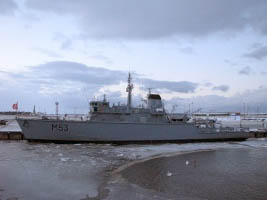
Late in the evening of 9 December mine countermeasures vessel M53 with a crew of 20 Lithuanian naval officers docked at the Naval Flotilla in Klaipėda Seaport. It is the first of two mine countermeasures vessels the Lithuanian Armed Forces is procuring from the United Kingdom. |
|
| Promotion of film industry in Lithuania discussed at MFA | 6 October 2010 |
Senior officials of Lithuania’s Ministry of Foreign Affairs held meetings with Executive Director of the Greater Philadelphia Film Office Sharon Pinkenson recently, who acquainted them with the activities of the office in attracting filmmakers to the region of Philadelphia, and in creating favorable working conditions for them. Possibilities of attracting film production, creation of favorable fiscal and administrative conditions for various film production and positive impacts of film industry on the local economy were discussed during the meetings of Sh.Pinkenson with Lithuania’s Vice-Ministers of Foreign Affairs Evaldas Ignatavičius and Asta Skaisgirytė Liauškienė. Sh.Pinkenson is paying a visit to Lithuania at the initiative of Lithuania’s appointed Honorary Consul in Philadelphia Krista Bard. She aims to explore film production possibilities in Lithuania and to share her experience of attracting film production. Sh.Pinkenson brought the movie “Night Catches Us”, which was shot in Philadelphia, to the Kaunas International Film Festival that is currently taking place. She also intends to invite Lithuanian filmmakers to participate in Philadelphia Film Festival next year. The Greater Philadelphia Film Office is a non-profit organization that promotes the development of the film industry in the region. The Greater Philadelphia Film Office has been responsible for impacting the local economy with nearly $3 billion since 1992. The office is a member of the Association of Film Commissioners International. |
|
| Warm hearts - warm feet campaign ends at Ministry of National Defence | 6 October 2010 |
An acknowledgement event was held at the Ministry of National Defence, representatives of the 12th shift of the Lithuanian-led Chaghcharan Provincial Reconstruction Team and PE „Savanorių centras" thanked for participants of the campaign „Warm hearts - warm feet" who knitted socks for children of Ghor. |
|
| Peacekeepers ready for Afghanistan | 6 October 2010 |
The active phase of evaluation exercise of Ghor Provincial Reconstruction Team (PRT-12) before deployment to Afghanistan held in Kazlų Rūda Military Area ended. |
|
| Lithuanian blondes try to set world record | 6 October 2010 |
Vilnius, October 2 (ELTA) - From now on, Lithuania will be famous not only as a basketball or amber country, but also as a country that tried to set a world record - to bring together as many blondes as possible. On Friday evening, the movement of Lithuanian blondes opened its Olialia nightclub in one of the business centers. The record "1001 blondes at one party" became the culmination of the evening. Lithuanian Record Registration Agency "Factum" and representatives of the Guinness Book of Records were entrusted to register the record. According to unofficial data, the party was attended by over a thousand of visitors, out of which half were blonde girls and women. The organizers claim that whether the blondes who gathered in one place reached the world record will become clear in the nearest future. The exact number of blondes will be announced next week. After the registration of the record, the first party of blondes "The Power of Blonds 2010" began at the nightclub in Vilnius. Singer Mantas Jankavicius, Olialia pupytes, Olialia dream team dancers, DJ El Gato Rikke feat Martin on sax (Mosquito), DJ Santi Touch, DJ BLACKB congratulated the blondes on the setting of a new world record. The new Olialia nightclub was established in the premises of the former Pacha nightclub. The investments into the club stood at 10 million litas. The club can hold more than 1,000 people at a time. There are two halls playing different music, eight bars and two VIP zones with the best views to the dance floor. The halls are equipped with professional sound systems "Funktion one" and "L'acoustics" that will help to feel all the quality of the sound played in the nightclub. The bar situated on the left of the main hall will become a place for exceptional cocktails' fans. Stylish cocktails for lovers of gourmet drinks will be offered there. Other bars of the nightclub will offer cocktails that are quick to prepare for those who do not want to linger over the bar and wish to spend at least a minute at the dance floor. The Olialia nightclub plans to organize concerts of Lithuanian and foreign performers, various performances, presentations of collections, fashion shows. The broad spectre of events will fulfil the dream of each visitor of the club. Today, Olialia brand is operating in 75 business sectors: such products as Olialia Cola, Olialia Cola Ledai, italian food restaurants Olialia pizza, Olialia Computers, Olialia Accessories, internet portal Olialia.lt, music brand Olialia Pupytes, luxurious limousines Olialia Limo and Olialia beauty clinic are marked by the Olialia brand. Olialia brand is recognized by 81.8 percent of Lithuanian respondents and as many as 90.3 percent of 20-29 year old people. Olialia group is planning to develop its business in Latvia, Estonia, Russia, Ukraine, Belarus, Poland, the Czech Republic, Germany, Italy and Spain. |
|
| Čiurlionis 100 year anniversary in 2011 | 6 October 2010 |
Centennial anniversary of the death of M. K. Čiurlionis to be marked by different events locally and abroad The project "The Road to Čiurlionis” involves displaying copies of his art and photographs as well as brief biography at airports and railway stations. There are also plans to release a post stamp, CDs, and a publication containing artist\'s letters, as well as arrange for a wide variety of concerts and musical competitions in Lithuania and abroad. |
|
| The President: The 1960 Council of Europe PA resolution on the Baltic States has a historic meaning | 1 October 2010 |
Thursday, September 30, Vilnius - President of the Republic of Lithuania Dalia Grybauskaitė attended the commemoration of the 50th anniversary of the Resolution adopted in 1960 by the Parliamentary Assembly of the Council of Europe "On the situation in the Baltic States on the twentieth anniversary of their forcible incorporation into the Soviet Union", in the Seimas of the Republic of Lithuania. The President underlined that the resolution adopted fifty years ago showed us today the historic meaning of the actions taken back then by the free part of Europe to make sure that the world does not forget the three countries - Lithuania, Latvia and Estonia - deleted from the political map. "In this document, members of the Assembly acting on behalf of their fellow citizens spoke out to declare the annexation of the Baltic countries illegal and forced against the will of people, and, no less importantly, expressed belief that the oppressive communist regime would not crush Lithuanians', Latvians' and Estonians' faith in freedom and democracy. The resolution also called on the national governments of the Council of Europe to support efforts of Baltic emigrants to cherish their culture, language and traditions. Europe did care about occupied countries and wanted them to be ready to reunite with the family of democratic states when the big day comes," President Dalia Grybauskaitė said. According to the President, the resolution was a confirmation that the Baltic States remained an independent subject under the international law and that Lithuania, Latvia and Estonia retained the possibility to seek independence by way of free self-determination by free nations. This raised new hopes and inspired the Baltic nations to continue the fight by exploring every possible means of unarmed resistance, feeling support from the international community. "The road to freedom would have been much more difficult and tragic for the Baltic States if we had not been feeling continued support from our friends from outside the Iron Curtain. This resolution of European national MPs is another proof of us being - now, in the past and in the future - a part of Europe and of our commitment to the same values of freedom and democracy," President Dalia Grybauskaitė said. |
|
| President's Address to the UN General Assembly | 1 October 2010 |
Address by H.E. Dalia Grybauskaitė, President of the Republic of Lithuania, at the general debate of the 65th session of the United Nations General Assembly in New York Mr. President of the General Assembly, I am delighted and privileged to address this House. I believe this is the right place to discuss the issues of greatest concern to the international community. The recent years have been marked by many challenges. All countries, large and small, had to tackle the financial and economic crisis. They also had to deal with the painful consequences of natural and man-created disasters. In a global world, all our countries must share responsibility for the future. The scale of our deeds and the openness of our hearts will make the difference, not the size of our territories. Here, I would like to share with you some views from Lithuania. Gender equality is another topic of vital importance for the Nations. We decided to promote it in the framework of the Community of Democracies. That is another example of focused action. Gender equality issues are rarely associated with overcoming the economic crisis or stopping climate change. However, it has been estimated that the elimination of gender discrimination in the labor market could increase the GDP by as much as 30%. It seems that Lithuanian people have decided to test this estimation in practice! It is of no surprise for us that women in Lithuania hold a number of top positions in politics and in business life. It is only natural that Lithuanian women made their own the famous saying: When the going gets tough, the tough get going! Let us all put all our efforts together to eradicate intolerance and discrimination which so often are the main reasons for so many conflicts in the world! By doing this we also pave the road to the Millennium Development Goals that we all strive to achieve. European Union activities such as the European Institute for Gender Equality based in Lithuania can serve as a lead to other regions. Security, environment and gender equality - all are interdependent. And all need to be adequately addressed on the international agenda. It is a prerequisite for ensuring sustainable development. We have engaged in such difficult initiatives as the training of national security forces of Afghanistan. Working together with the people of Ghor Province in Afghanistan Lithuania has funded a number of community-based education programs, built nineteen schools which have opened-up their doors also for girls, founded the first public library in the province's capital of Chaghcharan. That is our modest contribution, but it works. I am sure - each time we implement a concrete project, we move closer to achieving our global objectives. I invite you all to contribute. We should welcome, support and multiply every constructive effort, however small it may seem. Only joint efforts and concrete deeds will bring positive change to international politics. Let us develop initiatives, let us implement best practices and let us work together! Thank you for your attention. |
|
| Launch of US-Baltic Foundation for educational and exchange programs announced in New York |
1 October 2010 |
On 23 September in New York, the governments of the United States of America and Lithuania, Latvia, and Estonia announced the launch of the Baltic-American Freedom Foundation (BAFF). The launching ceremony was attended by US Deputy Secretary of State James Steinberg and foreign ministers of the three Baltic States: Lithuania‘s Audronius Ažubalis, Aivis Ronis from Latvia and Estonia‘s Urmas Paet. BAFF has a mission to enrich the ties between U.S.A. and Lithuania, Latvia, Estonia through educational and exchange programmes. The foundation will provide financial support for the internships of the students and young experts from the Baltic States at the U.S. enterprises, it will grant scholarships for scientific research and studies at the U.S. universities. At the ceremony dedicated to the launch of the foundation, Minister A.Ažubalis said that this foundation was an important bridge between the young people of the Baltic States and the USA, between future generations, future politicians, businessmen and scientists. Deputy Secretary of State J.Steinberg also highlighted the importance of the ties between the societies of the Baltic States and the USA. He said that the citizens of the Baltic States and their diasporas in America had always been a very active and positive strength, of which America was very proud. BAFF was established in the beginning of 2010 and succeeds to the Baltic-American Enterprise Fund, which was functioning in the Baltic States from 1994 to 2008. Currently, BAFF offers scholarships for post graduate studies, professional internships and participation in scientific research in the USA. For more information on the foundation and the procedures for submitting applications please visit http://www.balticamericanfreedomfoundation.org/. US Deputy Secretary of State and foreign ministers of Lithuania, Latvia and Estonia also discussed the necessity to strengthen the political dialogue between the Baltic States and the USA. J.Steinberg confirmed that the US Secretary of State was considering a possibility to pay a visit to the Baltic States. Lithuania plans to host ministerial meetings of the Community of Democracies and the Organization for Security and Co-operation in Europe. The Baltic States‘ ministers thanked the USA for taking care about the security of the countries. Preparations for the forthcoming NATO Summit were also discussed at the meeting in New York. Minister A.Ažubalis noted the necessity for the Summit to discuss further enlargement of NATO and said that the enlargement issue should be stronger emphasized in NATO‘s new Strategic Concept. The participants of the meeting agreed that the issue of Georgia‘s NATO membership had to be high on the agenda of the Summit. |
|
| Multinational special operations exercise Jackal Stone | 23 September 2010 |
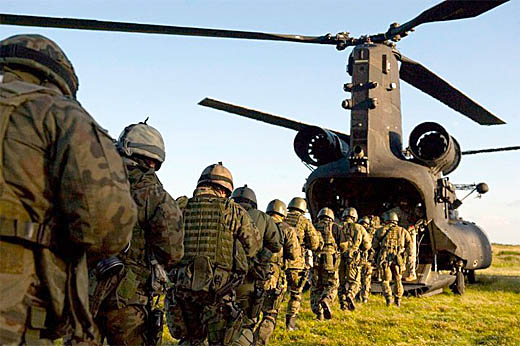
The biggest multinational special operations forces exercise of the year, code-named Jackal Stone 2010, is simultaneously being held in Lithuania (Klaipėda) and Poland from 13 September.
Jackal Stone involves over 1,100 special operations forces troops from seven countries: Lithuania, Poland, USA, Latvia, Croatia, Romania, and Ukraine. The key purpose of Jackal Stone 2010 is to co-ordinate actions for special operations by joint activities and to share experience gained during exercises and missions in Afghanistan. |
|
| Lithuania aims to integrate national minorities and preserve their identity | 23 September 2010 |
The main objectives of national minorities policy of the state of Lithuania are further integration of national minorities into Lithuania’s social, political, economic and cultural life and culture, also helping them to preserve and foster their national identity, Lithuania’s Minister of Foreign Affairs Audronius Ažubalis said on 17 September in Vilnius at the conference, dedicated to the discussion of the situation of Lithuania’s ethnic communities. The Minister stressed that after the re-establishment of the state, Lithuania took a step in the right direction - the Supreme Council (Reconstituent Seimas) of the Republic of Lithuania adopted the so-called “zero option” variant of the Law on Citizenship. According to this law the Lithuanian citizenship was granted to all nonnative persons who expressed such a wish. They became citizens of Lithuania with equal rights and responsibilities. Minister A.Ažubalis said that this helped to maintain political stability in the society and avoid confrontations. “Representatives of all the national minorities of the country took part in the creation of Lithuania’s modern history,” the Minister said. According to the Minister, this was demonstrated by the representatives of national minorities, who had worked and were still working in Lithuania’s diplomatic service, and in the field of foreign policy. “Not so long ago, Lithuania was represented even by three ambassadors of the Karaim background and this ethnic minority is considerably small. A member of the Polish community had worked as a Vice-Minister of Foreign Affairs. Currently, Lithuania’s diplomatic missions abroad are headed by diplomats of Russian and Belarusian origin, and our restless incumbent Chairman of the Committee on Foreign Affairs of the Seimas (Parliament) of Lithuania is a Lithuanian Jew,” Minister A.Ažubalis said. The Minister stressed that the achievements of his colleagues demonstrated that opportunities were open to everyone in Lithuania, who would choose to integrate into Lithuania’s multicultural society. According to Minister A.Ažubalis, the Ministry of Foreign Affairs constantly informs various international organizations, including the United Nations, on the situation of national minorities in Lithuania, the implementation of programmes and of the Pact of Civil and Political Rights, in which the protection of national minorities constitutes an important part. “The implementation of the principles of European Law is an integral part of our country’s legislation. The need arose this year to adopt a new Law on Ethnic Minorities, and a representative from the Ministry of Foreign Affairs is also involved in the preparation of the concept of this law. I believe that during the autumn session, the Seimas (Parliament) will continue to examine the regulation regarding the situation of ethnic minorities,” the Minister said. The Minister identified issues of ethnic communities as one of the priorities of Lithuania’s upcoming chairmanship of the Organization for Security and Co-operation in Europe (OSCE) in 2011. “We are a successful multicultural democratic country and we cherish universal human values, the dissemination of which complies with national interests of Lithuania and other OSCE member states. We care about human rights and fundamental freedoms, ensuring of them and full-right participation of civil society in public activities. Lithuania is ready to continue on the topic of tolerance and non-discrimination. These topics cannot be separated from the freedom of speech and press,” the Minister said. The conference was co-organized by Lithuania’s Ministry of Foreign Affairs, the Ministry of Culture and the House of National Communities. |
|
| Vilnius authorities to "hunt" for investments in US | 23 September 2010 |
Vilnius, September 17 (ELTA) - Vilnius intends to cooperate with the U.S. cities in the areas of culture, education, agriculture and services. Vilnius City Municipality delegation headed by Vilnius Mayor Vilius Navickas went to the United States went to the United States. There, the delegation will meet representatives of the Department of Baltic Countries to discuss possibilities to develop bilateral economic and cultural relations of Vilnius and American cities, Vilnius City Municipality informs. During the visit, it is planned to hold a meeting with representative of the Baltimore Planning Department Beth Strommen to discuss urban security and development issues, to present the most interesting Baltimore city development projects. During the visit that will last for one week, the Lithuanian delegation will also meet with potential investors and discuss opportunities of investment in Vilnius city infrastructure objects. |
|
| Lithuania a real NATO member - President | 21 September 2010 |
President Dalia Grybauskaitė watched the multinational special operational forces exercise Jackal Stone 2010 in Klaipėda. At the special forces squadron headquarters, the President met with Lithuanian, Polish, US, Latvian, Croatian, Romanian and Ukrainian troops taking part in the exercise. The President also inspected the helicopters and the command ship USS Mount Whitney which was used in the exercise. "Lithuania is a rea, and not just a formal NATO member. Today's exercise, in which Lithuania is one of the best represented states, shows that we are an equal partner in the alliance and that we are properly prepared for the most difficult NATO missions," the President said as she watched the special operational forces exercise. |
|
| Minister Eligijus Masiulis: everybody needs access to the Internet | 17 September 2010 |
Today in Vilnius the global Internet Governance Forum IGF2010 was opened officially. The Forum will continue four days. Internet policy leaders and innovators from many countries of the world have gathered for joint discussions. At the opening ceremony participants of the Forum were welcomed by President of the Republic of Lithuania Dalia Grybauskaitė, by UN Assistant Secretary-General for Economic and Social Affairs Jomo Kwame Sundaram, and by Lithuanian Minister of Transport and Communications Eligijus Masiulis. “The Internet Governance Forum is one of the largest events arranged in Lithuania and certainly it is the most important one in the field of information technologies. It is an opportunity and challenge for us – we will try to be active in discussing the main theme of the Forum, the particularly important Internet development theme”, said Minister Masiulis. |
|
| Parliamentary Forum of the Community of Democracies | 17 September 2010 |
On 15 September during the teleconference of the Parliamentary Forum of the Community of Democracies entitled “Limits of Democracy: Challenges in Eastern and Central Europe and in South and Central America” in Washington, DC, Lithuania’s Minister of Foreign Affairs Audronius Ažubalis welcomed the participants of the conference from Brussels. When congratulating the participants on the International Day of Democracy, Minister Ažubalis stated that the European Council meeting on 16 September would focus on relations with the European Union’s strategic partners and on its place in the world. The Minister said that from Lithuania’s point of view, the choice of the EU’s strategic partners had to be determined not only by geography, economy or business interests, but also by democratic values. “It is important to us that the EU-US transatlantic relations would be cherished and strengthened not only as a guarantee of the viability of democracy, but also as the basis of European and American prosperity,” the Minister said. Having opened the meeting, President of the Parliamentary Forum, Chairman of the Committee on Foreign Affairs of the Seimas (Parliament) of Lithuania Emanuelis Zingeris said that when celebrating the twentieth anniversary of important democratic achievements in Europe and the re-establishment of Lithuania’s independence, the unification of the Western, Central and Eastern Europe, today we were also witnessing the process of the democratic recession around the world. US House Foreign Affairs Committee chairman Howard L. Berman evaluated the level of democracy that the Central and Eastern European countries had reached after regaining their independence. He called on parliamentarians, who were attending the event, to get more actively involved in the democracy-building process around the world. President of the European Parliament Jerzy Buzek stressed that the democracy-building process never stopped. According to him, other countries still needed help, the forms of democracy could vary, but values remained the same: human rights and freedoms, free elections. Senior Director for Multilateral Affairs for the US National Security Council Samatha Powers conveyed greetings from US President Barack Obama to the participants of the forum. The event joined two continents of the world - North America and Europe. The teleconference “US Congress - European Parliament” provided a unique opportunity to the participants of the forum in Washington, DC to discuss the democracy-building process in Central and Eastern Europe, South and Central America not only with those, who were participating, but also with parliamentarians in Brussels. The event is attended by President of the European Parliament Jerzy Buzek, Speaker of the United States House of Representatives Nancy Pelosi, US House Foreign Affairs Committee Chairman Howard Berman, Speaker of the Seimas (Parliament) of Lithuania Irena Degutienė, Speaker of the Parliament of Georgia David Bakradze, Deputy Marshal of the Senate of Poland Zbigniew Romaszewski, Israel’s Foreign Minister Avigdor Liberman, US Senator John McCain, Lithuania’s Representative in the European Parliament Vytautas Landsbergis, Members of Parliament and politicians from around the world. The goal of the meeting in Washington, DC is to share thoughts on the democracy-building process in various regions of the world, to discuss the future of the Parliamentary Forum of the Community of Democracies and to take concrete steps further developing its activities. The purpose is to eventually transform the forum into one of the most important and the most effective international instruments to ensure the promotion of democratic values, human rights and freedoms worldwide. The Parliamentary Forum of the Community of Democracies and a long-term member of the US House of Representatives Lincoln Diaz-Balart organized the event with the assistance of Lithuania’s Embassy in Washington, DC. The Parliamentary Forum intends to adopt a resolution on the establishment of the Secretariat of the Parliamentary Forum of the Community of Democracies in Vilnius. The Secretariat would contribute significantly to the strengthening of activities of the Parliamentary Forum of the Community of Democracies and to the consolidation of an inter-parliamentary cooperation and coordination center in Vilnius. Lithuania took over the Presidency of the Community of Democracies in mid-2009 and will chair this organization until mid-2011. |
|
| Jackal Stone 2010 - Multinational special forces exercise | 17 September 2010 |
On September 13 the biggest multinational special operations forces exercise „Jackal Stone 2010" held in Lithuania and Poland this year began. |
|
| 300 km2 of Baltic surveyed during Open Spirit 2010 | 12 September 2010 |
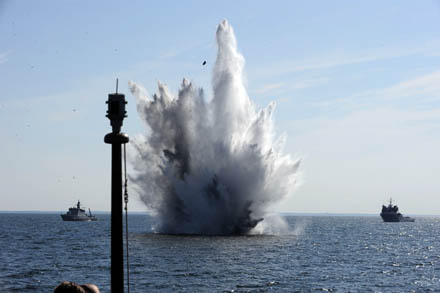
The multinational naval mine clearance exercise 'Open Spirit 2010' ongoing from 27 August in the territorial waters and exclusive economic zone of the Republic of Lithuanian in the Baltic Sea have already resulted in the discovery of one torpedo, four naval mines, one depth bomb and over 30 naval mine anchors in the already surveyed area of 85 sq. nautical miles (around 300 sq. km).
On 7 September Rasa Juknevičienė, Minister of National Defence, Maj Gen Arvydas Pocius, Chief of Defence of the Lithuanian Armed Forces, Adm (R) Kęstutis Macijauskas, Commander-in-Chief of the Lithuanian Naval Force, commanders of other branches of the national armed forces, military attachés in Lithuania of states participating in the exercise and media representatives took part in the visitors' day of Open Spirit 2010. Participants observed the neutralisation of explosives and a parade of participating ships aboard a warship. |
|
| OSCE event dedicated to energy security to be held in Vilnius | 12 September 2010 |
Vilnius, September 10 (ELTA) - On September 12-14, a first event related to Lithuania's presidency over the Organization for Security and Cooperation in Europe (OSCE) - a special meeting of the OSCE experts at which the OSCE's future contribution to the international energy security will be discussed - will be held in Vilnius. Nearly 200 international organizations, experts from business and academic communities from 56 countries will discuss the OSCE's role and cooperation in energy security. The event will be opened by the OSCE Secretary General Marc Perrin de Brichambaut, and closed by Lithuanian Minister of Foreign Affairs and future OSCE Chairman Audronius Azubalis. The OSCE secretary general will prepare a report on the role of the organization in addressing energy security issues. Lithuania will take over the presidency over the OSCE from Kazakhstan in 2011. |
|
| US troops to train for ISAF mission in Afghanistan in Lithuania | 12 September 2010 |
Vilnius, September 10 (ELTA) - On September 8-9, representatives of US Army Europe Command visited Lithuania and discussed conditions and programs of joint pre-mission training of US and Lithuanian troops with representatives of the Ministry of National Defence and the Lithuanian Armed Forces, the Ministry of National defence reports. US representatives paid a visit to Pabradë Military Area of the Lithuanian Armed Forces and toured Gen Adolfas Ramanauskas Warfare Training Centre in Nemencine - locations of the pre-mission training. Twelve soldiers of the Pennsylvania National Guard are expected to arrive in Lithuania by mid-October and then start a collective three-week training course with eight Lithuanians before deployment to Afghanistan. Lithuanian and US personnel will form a new unit - Police Operational Mentor and Liaison Team (POMLT), which will provide training for local police of Ghor. "Military areas and training base where Lithuanian and US troops will undergo training jointly are well equipped with relevant facilities to provide training for military personnel. We believe that POMLT project will be successful and continue enhancing cooperation between Lithuania and USA as the Lithuanian Armed Forces prepares for training course for POMLT project with great responsibility," said Maj Eric Boyar (US Forces in Europe Command). POMLT will enter operation in Ghor in November together with the incoming PRT rotation. Police Operational Mentor and Liaison Team will be commanded by a Lithuanian officer. As Lithuania intensifies support to Afghan national security forces in its responsibility area, Ghor province, where the majority of such force is local police, Police Operational and Mentoring Team will be established to provide training for local officers. Involvement of the Pennsylvania National Guard into the Lithuanian-led project will extend a long and successful cooperation between Lithuania and USA in Ghor. |
|
| US Navy command ship Mount Whitney to arrive at Klaipeda Seaport | 12 September 2010 |
Klaipeda, September 10 (ELTA) - The 6th Fleet US Navy command ship "Mount Whitney" will visit Klaipeda Seaport on September 11 and then participate in the multinational special operations forces exercise "Jackal Stone 10," which will be hosted in Lithuania and Poland beginning September 13, the Ministry of National Defence reports. During its stay in Klaipeda Seaport, the ship's captain and representatives of the Lithuanian Armed Forces are expected to meet with authorities of Klaipeda City and circuit. USS "Mount Whitney" serves as flagship of the 6th Fleet of the US Navy and has been the command and control ship of the Joint Command Lisbon and Commander NATO Striking Force since February 2005. USS "Mount Whitney" was named after the highest 14 500-feet peak in Sierra Nevada. In August 2008 "Mount Whitney" was deployed in the Black Sea to ensure provision of humanitarian relief for victims of Russian-Georgian war. "Mount Whitney" was the first US ship to bring shipment to Poti Seaport in Georgia. |
|
| Lithuanians and Poles were aspiring to freedom both 600 and 20 years ago - Azubalis | 12 September 2010 |
Kaunas, Sept 9 (ELTA) - On 9 September in Kaunas, during an international academic conference dedicated to the 600th anniversary of the Battle of Grunwald, Lithuania's Minister of Foreign Affairs Audronius Azubalis noted the symbolism of the fact that both 600 and 20 years ago Lithuanians were aspiring to freedom together with the Polish people, the press service of the Foreign Ministry reports. "I could give here a long list of historical facts, battles and treaties that link the two nations. We can be glad that Lithuania and Poland have enjoyed a close partnership for 600 years already. Lithuanians and Poles have to responsibly pay regard to our common historical and cultural heritage that is unique both in Europe and throughout the world," Minister Azubalis said. According to the Minister, King of Poland Jogaila and Lithuanian Grand Duke Vytautas were great diplomats, who had left indelible imprint not only on the history of Lithuania and Poland, but also on the history of entire Europe. "I am certain that the discussions during this conference will allow you to take a fresh look at the European history that was created by these two persons, who were also cousins, and at their contribution to the development of the states of Lithuania and Poland," head of Lithuania's diplomacy said. The Minister said that the Battle of Grunwald was most often perceived as a military victory, although it was won not just on the field of Grunwald. The allies - the Grand Duchy of Lithuania and Poland - laid the foundations for this victory in 1409-1410, when with the help of the most famous scholars and publicists of the time they defended their position on the international arena through diplomatic channels. According to the Minister, this struggle demonstrates Lithuania's high-level diplomacy of the time. Minister Azubalis also said that the Battle of Grunwald left its distinctive mark on further development of Central and Eastern Europe and Lithuania's history. The Battle is also the best example of the might of solidarity between the nations. Representatives from Vytautas Magnus University in Kaunas and the Jagiellonian University of Krakow, also Lithuanian, Polish and Ukrainian historians are taking part in the two-day international academic conference in Kaunas. Lithuania's Minister of Foreign Affairs Azubalis and Poland's Foreign Minister Radoslaw Sikorski are patrons of the conference. |
|
| Island of blondes to appear in Maldives | 12 September 2010 |
Vilnius, September 1 (ELTA) - The island of blondes will appear in Maldives, a press release of Olialia Group, headed by the Leader of the Lithuanian blonde movement Giedre Pukiene, says. There are plans to build hotels, entertainment and spa centres on the island. All the staff of the island will be selected exclusively by hair colour - only blondes will be employed there. According to the authors of the project, a specially established airline will be taking the blondes to the island. The press release states that the pilots and stewardesses on the planes will also be blonde only (it is not specified whether the pilots will be women). Giedre Pukiene assured that at the moment her company was negotiating with the owner of one of the islands in Maldives, who was ready to cooperate in the creation of the island of blondes. "The negotiations are going well and soon we will be ready to present our project," said the head of the Lithuanian blonde movement, however, she did not name the exact date of the presentation. As reported, the movement of Lithuanian blondes that brings together 20,000 Lithuanian women decided to challenge Richard Branson, the founder of the famous Virgin Group, and create a brand that would be more recognizable in the world than "Virgin". The company Olialia Group was established for this purpose. "Blondes are a great power that should not be underestimated. We are smart, beautiful, reckless and purposeful. Two years of active developments in Lithuania have proved our capabilities," says Giedre Pukiene. Today, Olialia brand is operating in 75 business sectors: such products as Olialia Cola, Olialia Cola Ledai, italian food restaurants Olialia pizza, Olialia Computers, Olialia Accesssories, internet portal Olialia.lt, music brand Olialia Pupytes, luxurious limousines Olialia Limo, Olialia Limo and Olialia beauty clinic are marked by the Olialia brand. |
|
| Azubalis bids farewell to outgoing Irish ambassador | 12 September 2010 |
Vilnius, Aug 26 (ELTA) - On 26 August, Lithuania's Minister of Foreign Affairs Audronius Azubalis bade farewell to the outgoing Ambassador of Ireland to Lithuania, Donal Denham, the press service of the Foreign Ministry reports. The Minister thanked the Ambassador for fostering cooperation between Lithuania and Ireland in the period of the past five years during which the bilateral agenda was very intensive. According to the Minister, the visit of Lithuania's President Dalia Grybauskaite to Ireland in May is a positive contribution to further development of bilateral relations. According to Minister Azubalis, it is important to maintain close bilateral relations and to share experience, as the Lithuanian and Irish Presidencies of the European Union and Chairmanships of the Organization for Security and Co-operation in Europe (OSCE) are approaching. Ireland will take over the OSCE Chairmanship from Lithuania in 2012. Lithuania will chair this organization in 2011. In the second half of 2013, Lithuania will take over the EU Presidency from Ireland, which will hold the EU Presidency in the first half of 2013. Minister Azubalis stressed the importance of recognizing the marriages of Lithuanian citizens that were registered at Lithuania's Embassy in Dublin so that they would become legal in Ireland. The Minister expressed trust that a decision favourable for Lithuanian citizens would be made at an early date. Denham is the first Irish Ambassador, who resides in Lithuania. He has been working in Lithuania since 2005. Denham is also accredited to Belarus. |
|
| Azubalis bids farewell to outgoing Irish ambassador | 29 August 2010 |
Vilnius, Aug 26 (ELTA) - On 26 August, Lithuania's Minister of Foreign Affairs Audronius Azubalis bade farewell to the outgoing Ambassador of Ireland to Lithuania, Donal Denham, the press service of the Foreign Ministry reports. The Minister thanked the Ambassador for fostering cooperation between Lithuania and Ireland in the period of the past five years during which the bilateral agenda was very intensive. According to the Minister, the visit of Lithuania's President Dalia Grybauskaite to Ireland in May is a positive contribution to further development of bilateral relations. According to Minister Azubalis, it is important to maintain close bilateral relations and to share experience, as the Lithuanian and Irish Presidencies of the European Union and Chairmanships of the Organization for Security and Co-operation in Europe (OSCE) are approaching. Ireland will take over the OSCE Chairmanship from Lithuania in 2012. Lithuania will chair this organization in 2011. In the second half of 2013, Lithuania will take over the EU Presidency from Ireland, which will hold the EU Presidency in the first half of 2013. Minister Azubalis stressed the importance of recognizing the marriages of Lithuanian citizens that were registered at Lithuania's Embassy in Dublin so that they would become legal in Ireland. The Minister expressed trust that a decision favourable for Lithuanian citizens would be made at an early date. Denham is the first Irish Ambassador, who resides in Lithuania. He has been working in Lithuania since 2005. Denham is also accredited to Belarus. |
|
| International mine operation “Open Spirit 2010" to be held in Baltic Sea | 29 August 2010 |
Vilnius, August 26 (ELTA) - On August 27-September 8, _Open Spirit 2010" international mine clearance exercise will be conducted in the exclusive economic zone and territorial waters of Lithuania in the Baltic Sea. It is going to be the most extensive naval mine clearance exercise since 2008, informs Ministry of National Defence. 16 warships and three diving teams from ten countries will be involved in the exercise organised by the Lithuanian Naval Force: Belgium, Estonia, Latvia, Poland, Lithuania, Norway, France, Russia, Finland and Germany. Lithuania will be represented by three ships - mine sweeper M52 Suduvis and patrol ships P11 Žemaitis and P14 Aukštaitis. Objective of Open Spirit 2010 is to reduce the threat caused to safe navigation by naval mines and other unexploded ammunition remaining on the Baltic seafloor from WWI and WWII. The event also boosts trust and cooperation among participating countries, and improves skills of participating ship crews, staff officers and leadership. During the exercise phase ashore, August 27-29, commanders of participating ships and representatives of the exercise command are expected to meet with authorities of Klaipeda Municipality, and participate in tribute ceremonies for fallen German, Russian and French soldiers at the military cemetery. Ship crews are expected to meet for a sports match. On August 28-29 at14-17 hrs mine hunters and sweepers participating in the exercise will be open for public visiting at the Cruiser and Warship Terminal of Klaipeda. On September 7 guests and media day is planned during which progress of the mine clearance operation and results achieved will be represented. The first international mine clearance operation of such scope in Territorial waters and exclusive economic zone was held in May 2008. 420 sq. m of seabed was searched during _MCOPLIT 08", tens of explosives were found and neutralized, two shipwrecks were detected and marked in naval charts. |
|
| Azubalis encourages ambassadors to take initiative in developing economic diplomacy | 29 August 2010 |
Vilnius, August 26 (ELTA) - On 25 August in Vilnius, during the annual convention of the heads of Lithuania's diplomatic representations, Minister of Foreign Affairs Audronius Azubalis encouraged the ambassadors to take the initiative in searching for potential investors from the countries of their representation, and in inviting Lithuanian businesses to look for export opportunities and partners, informs Ministry of Foreign Affairs. "I would like to take the opportunity to encourage fellow ambassadors to set out one or two very specific tasks of economic diplomacy in the sphere of your activities and in addition to the specific plans for the next year. You should foresee possible results and work in order to implement them. Your actions are particularly needed now," Minister Azubalis said. According to Lithuanian Prime Minister Andrius Kubilius, who took part in the session on the cooperation between diplomatic services and business, changes in many spheres and a lot of effort of Lithuania's diplomacy are needed in order to transform Lithuania into an open and dynamic country that does not fear global competition. At the meeting, Minister Azubalis mentioned that activities of Lithuania's diplomatic service contributed? to the implementation of tasks, which were set out by the Government. "Three out of six priorities of Lithuania's Government for 2011 - creation of modern economy, enhancing energy security and modern governance of the state - are reflected in the strategic action plan of the Ministry of Foreign Affairs," Minister Azubalis said. Representation of economic interests abroad is one of the main directions of Lithuania's foreign policy. The Ministry of Foreign Affairs coordinates all the spheres of our country's foreign trade policy. Lithuania's diplomatic service promotes the development of economic relations not just with traditional partners (the EU, Russia, Ukraine, U.SA.), but also with China, India, the Middle East, Latin America, other emerging countries. Established diplomatic relations between countries and the existing global network of honorary consuls helps our entrepreneurs to work in the farthermost countries, to enter and compete in new markets that are little-known, "politicized" and, therefore, difficult. The effectiveness of Lithuania's activities in trade policy is illustrated by the fact that positive for Lithuania decisions were made in all the EU anti-dumping investigation, where Lithuanian producers had essential interests. Heads of Lithuania's diplomatic representations abroad, directors general of the two public organizations - "Enterprise Lithuania" and "Invest Lithuania" - Paulius Lukauskas and Mantas Nocius took part in the session at the Ministry of Foreign Affairs that was dedicated to the cooperation between the diplomatic service and business. |
|
| Lithuania's foreign minister highlights priorities of diplomatic service | 29 August 2010 |
Vilnius, Aug 25 (ELTA) - On August 25, the annual convention of the heads of Lithuania's diplomatic representations started in Vilnius. It will continue for two days. After a meeting with President of Lithuania Dalia Grybauskaite, Lithuania's Minister of Foreign Affairs Audronius Azubalis highlighted the priorities of diplomatic service to the ambassadors, the press service of the Foreign Ministry reports. The Minister noted that celebrating the 20th anniversary of the diplomatic service of the re-established State of Lithuania this year, it was worth remembering that this single institution of interwar Lithuania testified to the continuity of the statehood as the diplomatic service had not ceased to exist until the re-establishment of the State two decades ago. According to Minister Azubalis, the diplomatic service played one of the key roles in the process of regaining Lithuania's independence, it contributed to Lithuania's accession to the European Union and NATO, the diplomatic service made a substantial contribution to further development and strengthening of the country. At the meeting of the heads of diplomatic representations, the Minister presented the key goals of Lithuania's diplomatic service and of the Ministry of Foreign Affairs (MFA). According to the Minister, taking into consideration the challenges of domestic and international policy, the main tasks are: to serve the citizens of Lithuania and the State as efficiently as possible, to contribute to the stability and peace in the world. "Protection of interests of Lithuania's citizens abroad, efficient provision of consular services to Lithuanian and foreign citizens is the top task and duty of the MFA," Minister Azubalis said. Continuing on this topic, the Minister stressed that the diplomatic institutions had to help encouraging the involvement of Lithuanian's living abroad into the life of the State of Lithuania. According to the Minister, the "Global Lithuania" development strategy that was prepared by the MFA and currently is under consideration should be jointly created and owned not by the MFA, but by those who hold themselves Lithuanians and those who agree with the idea of the consolidation of Lithuanian diaspora. The Minister also spoke about efficient participation of Lithuania in the EU. He identified major ongoing tasks: increasing the economic competitiveness, implementing the EU Strategy for the Baltic Sea Region, cross-border cooperation and security of Lithuania's external borders, ensuring energy security in order to achieve full integration of energy infrastructure of Lithuania and the Baltic States into the EU. According to Minister Azubalis, another challenge to the State is protection and representation of its economic interests. The Minister believes that the economic diplomacy is not just a tool for the development of Lithuania's national business, but also an essential measure for accelerating positive changes in the economy. "I invite you to take initiative both in searching for potential investors in the countries of representation, and in encouraging the Lithuanian business to look for export opportunities. Your actions are particularly needed now," the Minister said. When speaking about the protection of national interests of the State, the Minister drew the ambassadors' attention to the strengthening of transatlantic relations and democracy in the region. The Minister stressed that the development of our State was closely followed by our neighboring countries, which were also learning from our experience. The Minister also highlighted that the development of relations with Russia had to be based on mutual respect and benefit. The Minister also emphasized that it was not less important to respect Lithuania's international obligations, aiming to contribute to the consolidation of peace, security and stability within the international community. Minister Azubalis noted the challenges and advantages of the upcoming Lithuania's chairmanship of the Organization for Security and Co-operation in Europe in 2011 and the Presidency of the European Union in 2013. According to the head of Lithuania's diplomacy, the Nordic-Baltic cooperation is one of the most important directions of Lithuania's foreign policy. "Our main task is to establish Lithuania as an active, open, dynamically evolving country of the Baltic Sea region", Minister Azubalis said. In conclusion, the Minister said that taking into consideration limited budgetary resources, it was necessary to clearly define priorities among the objectives of the MFA. Minister Azubalis also presented the guidelines of staff policy reform of the diplomatic service. |
|
| Grybauskaite sees PR games in proposal to open up Kaliningrad | 29 August 2010 |
Vilnius, August 25 (ELTA) - President Dalia Grybauskaite sees a public relations game in the proposals to set up a visa-free regime with Kaliningrad region. "We think that perhaps there is a public relations game in that. If the European Union decides that Russia or Belarus or any other third party is ready for a visa-free regime and is a reliable partner in this respect, Lithuania will in no way object to that," Dalia Grybauskaite told journalists on Wednesday. The head of the state recalled that a year ago this idea was proposed to the Council of Europe and it was rejected not because of Lithuania, but because of the major European countries. "The new initiatives that we heard of are not harmonized on the European level. A year ago, Russia itself firmly opposed that it would be applied to Kaliningrad region only. Russia wanted it for the whole country," Grybauskaite said. |
|
| US Air Contingent readying to take over NATO Baltic Air-policing missionX | 25 August 2010 |
Vilnius, August 25 (ELTA) - August 25, four F-15C Eagle of the US Air Forces Europe will land in Siauliai Airbase of the Lithuanian Air Force. The US Air Contingent will replace the present rotation of troops from the Polish Air Force on the NATO Baltic Air-policing mission on September 1. |
|
| Grybauskaitė stresses necessity of having regional universities | 25 August 2010 |
Vilnius, Aug 24 (ELTA) - President Dalia Grybauskaite calls for improving the funding of higher education in such a way so that regional and specialised universities would survive. "There is a necessity of retaining regional universities as the centres of bright ideas, culture and education of these regions. The allocation of funds is not a perfect one and poses a threat that regional or specialised universities may disappear, unless the chaotic movement of these funds, which is based on market laws alone, stopped," presidential spokesman Linas Balsys said. According to the spokesman, during a meeting, Grybauskaite and Education Minister Gintaras Steponavicius focused on the issues related to the admission to higher education institutions. The president pointed out that she viewed the higher education reform itself favourably in essence and praised the introduction of a purposeful funding. However, Grybauskaite noted some drawbacks. The minister was criticised for the improper organisation of the admission to higher education institutions. The Presidential Office received some individual complaints concerning the admission. Steponavicius was reminded of notorious scandals about technical problems when entrants received erroneous reports or had to pay tuition even having very high marks. After the meeting, the education minister promised to demand better managerial, administrative and communication skills from the people responsible for the admission procedure. Steponavicius also emphasised that most talented young people chose to study in Lithuania. |
|
| Lithuanian diplomatic representations heads to meet in Vilnius | 25 August 2010 |
Vilnius, Aug 24 (ELTA) - On Wednesday, the heads of Lithuanian representations will meet with President Dalia Grybauskaite in Vilnius as part of their tenth annual meeting. The two-day meeting will be attended by the representatives of forty one embassies, eight consular institutions, nine representations to international organisations and the special mission in Afghanistan and two charges d'affaires. At the meeting, diplomats will focus on the Lithuanian foreign policy's priorities and prospects and the coming changes brought about by the new European External Action Service. Among other issues to be discussed are preparations for the next year's Lithuanian chairmanship of the Organisation for Security and Co-operation in Europe (OSCE) and for Lithuania's presidency of the European Union in 2013. As in previous years, much attention will be given to the interaction between diplomacy and business. It is intended to discuss ways and opportunities for Lithuanian foreign representations to assist Lithuanian businessmen in making new business contacts, finding new and developing the existing exports markets for Lithuanian goods and services. The leaders of Lithuanian diplomatic representations will also discuss an improvement of the quality of consular services and relations with the Lithuanians living abroad. |
|
| Symbolic bricks laid into sculptural wall of "The Road of Freedom" | 25 August 2010 |
Vilnius, August 23 (ELTA) - The Baltic Way is the nation's creation, it is the nation's hope and faith, it is a symbol of freedom and unity, it is the future of our nation - President Dalia Grybauskaite said on Monday, laying the nominal brick into the sculpture "The Road to Freedom" at the ceremony dedicated to the 20th anniversary of the restoration of the state of Lithuania. "The Road of Freedom" is a sculpture by Tadas Gutauskas symbolizing the live human chain that united three Baltic States who were striving for independence 21 years ago. The ceremony was attended by Speaker of the Seimas Irena Degutiene, Prime Minister Andrius Kubilius, Chairman of the Supreme Council Professor Vytautas Landsbergis, President Valdas Adamkus, guests from Latvia and Estonia, Sajudis chronicler Angonita Rupsyte, singer Algirdas Kauspedas, who laid bricks into the tricolor sculpture "The Road of Freedom" that was built in the beginning of the Baltic Way, near the Vilnius Pedagogical University. President Dalia Grybauskaite pointed out that the sculpture "The Road of Freedom" was a symbol of freedom that everyday reminded us of our people's desire for freedom, inspiring and uniting for today's challenges and future deeds. "As twenty years ago, we gathered here to remember and honour the event that was important not only in our lives, but in the lives of all Baltic people. The event that had a decisive importance for our future - the desire for freedom, when we unanimously said that no pacts could take away our freedom. For it is sacred. Then the world saw how united we were, and how much we wanted to be free. Such lessons of citizenship were new not only in our own history, but the history of the world. This lesson will remain immortal forever," the president said. |
|
| Staff personnel of the Motorised Infantry Brigade -Iron Wolf" to attend -Blue Knight" exercise in Germany | 25 August 2010 |
Vilnius, August 23 (ELTA) - On August 23-27, staff personnel of the Motorised Infantry Brigade "Iron Wolf " and troops of Gen Romualdas Giedraitis Artillery Battalion of the Lithuanian Armed Forces will take part in territory reconnaissance exercise -Blue Knight" organized by the Danish Division in Germany. Lithuanian personnel will train together with staff officers from Estonia, Latvia, and the Danish Division, informs Ministry of National Defence. Territorial reconnaissance exercise is a successive part of Brigade's training. The event will involve thorough reconnaissance of territory and application of the collected data for amending initial plans of staff operations of -Iron Wolf" drawn during the preceding exercises -Errant Knight" and -Red Knight". Motorised Infantry Brigade -Iron Wolf" was affiliated to the Danish Division in 2006 on the basis of Memorandum of Understanding signed by CHODs of the countries. Affiliation entails joint work of both countries' officers in multinational staffs, joint training and exercises, in order to ensure interoperability of Danish and Lithuanian units - their ability to work jointly in a spectrum of multinational operations. Affiliation of the -Iron Wolf" Brigade to the Danish Division allowed Lithuanian troops to join division corps-level exercise which a higher level exercise than it was possible before. Cooperation between MIB-Iron Wolf" and the Danish Division was especially active in implementing LITBRIG project - the third joint defence project of Denmark and Lithuania. LITART and LITBAT projects were completed successfully. Under LITART project Royal Danish Armed Forces trained personnel of the Gen Romualdas Giedraitis Artillery Battalion, handed over arms, equipment and ammunition. Lithuanian Grand Duke Algirdas Mechanised Infantry Battalion of MIB -Iron Wolf" was trained under LITBAT project. The Battalion provided personnel for the Lithuanian Contingent which conducted duty in the Danish Division-led Land Component of the NATO Response Force (NRF-14) in the Baltic Battalion this June. |
|
| Gruto Parkas – 4th Most Bizarre Museum in Europe | 24 August 2010 |
Lonely Planet, one of the most popular travel guide publisher, announced the list of the most bizarre museums in the world, and Gruto Parkas in Lithuania was listed in fourth position. Gruto Parkas is a collection of statues and paraphenalia from the time of the Soviet occupation in Lithuania and is sometimess called Stalin World. It, won the publishers over with its black humour and irony. Gruto Parkas, established in 2001, rated higher than The Museum of Bad Art in the US, the Hair Museum in Turkey,the International Towing and Recovery Museum in the US, British Lawnmower Museum, Sulabh Museum of Toilets and Museum of Crutches in Azerbaijan. However, Gruto Parkas was below Paris' Sewer Museum, The Meguro Parasite Museum in Japan and the Icelandic Phallological Museum. |
|
| Exhibition dedicated to 19th anniversary of death of volunteer Salakauskas opens at Seimas | 24 August 2010 |
Vilnius, August 18 (ELTA) - A photo exhibition dedicated to the 19th death anniversary of volunteer Arturas Sakalauskas was opened at the Seimas on Wednesday. Sakalauskas as a member of Alytus Territorial Unit of National Defence Volunteer Force was killed on 21 August 1991, during the provocation of the Russian Armed Forces by the Palace of the Supreme Council-Reconstituent Seimas. Two more volunteers of Alytus Territorial Unit were injured on duty in an assault of Russian Special Purpose Division on the Lithuanian-guarded territory in Gostautas street. Sakalauskas was born on 26 October 1963 in Alytus, he was employed in Alytus Car Factory before the fatal events. After joining the Voluntary National Defence Service in January of 1991, he was actively involved in the January events, guarded the Palace of the Supreme Council-Reconstituent Seimas, and carried out duty in the posts in Kaunas and Sitkunai. On August 19, he arrived in Vilnius and stood guard for the Parliament for the last time. Volunteer Arturas Sakalauskas was awarded posthumously the 1st degree Order of Vytis Cross, Commemorative Medal of 13 January, and Medal of the Founding Volunteer. |
|
| Commander-in-Chief of Lithuanian Naval Forces Macijauskas takes part in forum of Naval Commanders of Europe | 24 August 2010 |
Vilnius, August 18 (ELTA) - On August 12-14 Commander-in-Chief of the Lithuanian Armed Forces Adm (R ) Kestutis Macijauskas took part in a forum of Commanders of Naval Forces in Europe hosted by Copenhagen, Denmark, informs Ministry of National Defence. In the meeting strategic issues related to the European Naval Force, European maritime surveillance systems, problems caused by piracy, and others, were addressed. Leading naval officers also attended events of the 500th anniversary of the Danish Royal Navy. Forum of Naval Commanders of Europe is an informal, independent and unpolitical gathering of 26 countries. It includes naval commanders of the EU countries that have navies or naval forces. Such meetings are hosted by a European country annually on a rotational basis. |
|
| Mrs Universe contestants work against violence and human trafficking | 19 August 2010 |
On 18 August at the Ministry of Foreign Affairs of Lithuania, the contestants of Mrs Universe 2010 participated in a discussion on the fight with different forms of violence against women and human trafficking. They also signed a joint declaration confirming their intention to combat this problem. During the event, Lithuania's Vice-Minister of Foreign Affairs Evaldas Ignatavičius stressed that Lithuania was contributing to this fight on international level. Lithuania is carrying out various projects in the field of equal opportunities, fight against trafficking in human beings and violence against women in Afghanistan, Belarus and Georgia. According to the Vice-Minister, trafficking in human beings is not a phenomenon that would be irrelevant to Lithuanian society. Vice-Minister E.Ignatavičius added that the Ministry of Interior and the Ministry of Foreign Affairs, as well as Lithuania‘s diplomatic missions abroad faced the problem of human trafficking, they help to liberate women from slavery and bring them back to Lithuania, where they are given psychological support and other kinds of help. "The most important thing in the fight against human trafficking is close cooperation of national and international organizations. One state can not deal with this problem by its own", Vice-Minister E.Ignatavičius said. According to the Vice-Minister, the Baltic Sea region states are trying to cope with the challenge by joining efforts. The Council of the Baltic Sea States, which was chaired by Lithuania until 1 July, has its special Task Force against Trafficking in Human Beings. Lithuania is also cooperating with the United Nations and the Organization for Security and Co-Operation in Europe, that Lithuania will preside in 2011, with partner countries, where victims of trafficking often are taken. “Lithuania is also taking measures to reduce poverty and social exclusion in the country, thus reducing a potential number of victims, because the victims are usually from poorer families in the province and from the socially vulnerable segments of society“, Vice-Minister E.Ignatavičius noted. By signing the declaration, participants of Mrs Universe 2010 contest encouraged all women in the world, organizations working in the field of beauty, and famous people to join the fight against violence and human trafficking. Every year, about 800 thousand to 900 thousand people worldwide become victims of the human trafficking. Women and children are a particularly vulnerable subject to this criminal activity, a sort of modern slavery. |
|

| Underwater Picture Gallery Opens in Lithuania | 18 August 2010 |
Divers in Lithuania have opened the first underwater picture gallery, believing that the water in a lake in the west of the Baltic state unveils the beauty of art that cannot be seen on land. “Art is experienced totally differently in the water,” Andrius Albrikas, head of local diving academy, said. |
|
| Lithuanian Ambassador presents credentials to President of USA | 18 August 2010 |
On 10 August in Washington, Lithuania’s Ambassador Žygimantas Pavilionis presented his credentials to President of the United States of America Barack Obama. During the conversation that followed the solemn ceremony, Ambassador Ž.Pavilionis reminded to President B.Obama, that since the times of General Thaddeus Kościuszko (Tadas Kosciuška), both nations have fought together for freedom, human dignity and core values. Ambassador Ž.Pavilionis confirmed to the U.S. President Lithuania’s willingness to continue strategic cooperation on transatlantic matters, on the aid to Afghanistan and within the framework of the Community of Democracies. He added that Lithuania remains active and open to the ideas of freedom and democracy while preparing for the Chairmanship of the Organization for Security and Co-Operation in Europe in 2011 and Presidency of the European Union in 2013. The Ambassador stressed that Lithuania has gained considerable experience in the space of Russia and Eastern Europe and looks forward to an active cooperation with the U.S. on the issues of guaranteeing democracy and economic security in Eastern Europe. Ambassador Ž.Pavilionis emphasized the necessity to promote bilateral economic and cultural cooperation, to develop cultural youth exchange programs, to pursue gender equality by promoting women’s leadership and to maintain active and constructive relations with Lithuanian community in the US. President B.Obama assured the new Ambassador of Lithuania that the U.S. will continue to actively cooperate with Lithuania. He also noted that Lithuanian leadership and efforts in Ghor province of Afghanistan, especially during the economic crisis, are an example of Lithuanian people’s unselfishness, expression of the freedom’s appreciation and understanding. President B.Obama also highlighted the role of Lithuania as a leader of the Community of Democracies in reinforcing democracy worldwide, and expressed confidence in Lithuania’s OSCE chairmanship. The U.S. President said that he was also fascinated by T.Kościuszko (T.Kosciuška), idealist and fighter for freedom, and regards him as a symbol of Lithuanian-US relations, because both nations have the same ideals. President B.Obama sent cordial wishes for the people of Lithuania. According to the President, he recognizes and appreciates the support of the Lithuanian community in the U.S. to Lithuania’s aspirations of common goals and close relations between both countries. Prior to his appointment as Lithuania’s Ambassador to Washington, Ž.Pavilionis worked as Ambassador-at-Large in the Transatlantic Cooperation and Security Policy Department at the Ministry of Foreign Affairs and coordinated the issues of Lithuania’s Presidency of the Community of Democracies. Ž.Pavilionis is the sixth Lithuania’s Ambassador to the US. |
|
| Special guests, programs set for 96th annual Lithuanian Days | 18 August 2010 |
Washington, August 13 (ELTA) - The 96th annual Lithuanian Days will have the usual amount of fun, culture, heritage and, of course, lots of great ethnic food. This year will also remember one of the most important historic events in the history of Lithuania and Eastern Europe, republicanherald.com writes. Sponsored by the Knights of Lithuania Anthracite Council 144, Lithuanian Days will be held from 11 a.m. to 6 p.m. Saturday and noon to 4 p.m. Sunday in the Schuylkill Mall., Frackville. This year's theme is "Lithuanian Language, Song and Dance," said Larry Domalakes, council president. "We're going to emphasize the songs, dances and language of Lithuania," said Domalakes. "We're looking for people to come in to recite poetry." Two very special guests will attend this year's celebration. At 12:45 p.m. Saturday, Brig. Gen. Frank J. Sullivan, director of the Joint Staff, Headquarters, Pennsylvania National Guard, Fort Indiantown Gap, will speak. He manages programs and operations for the 100-plus member joint staff and oversees issues that impact the 19,000-member Pennsylvania National Guard, which has a military partnership with Lithuania. The State Partnership Program is designed to develop closer cultural and economic ties between Pennsylvania and Lithuania. Also speaking on the Lithuanian Partnership will be Master Sgt. Ronda Fawber and Capt. Terri Sillman. The new face of Lithuania entertainment will be seen through singer Robertas Kupstas. A native of Vilnius, the Lithuanian pop star will perform twice on Saturday and once on Sunday. "He will be something quite different than what people are used to," said Domalakes. "He will perform traditional and modern music. This is going to be a current event type of thing. We're trying to show that Lithuania is not just the old stuff, but it's a living, breathing country that has current stuff going on. This is a big thing. We're happy to get him." The celebration will also mark the 600th anniversary of the Battle of Tannenberg. The battle is also called the Battle of Grunwald. It was fought on July 15, 1410, as part of the Lithuanian-Polish-Teutonic War. The battle shifted the balance of power in Eastern Europe and marked the rise of the Polish-Lithuanian union as the dominant political and military force in the region. The battle was one of the largest battles in Medieval Europe and is regarded as the most important victory in the history of Lithuania and Poland. It was surrounded by romantic legends and nationalistic propaganda, becoming a larger symbol of struggle against invaders and a source of national pride. Also returning for Lithuanian Days is Lithuanian Partisans Living History Unit reenactment group from Baltimore. They will provide the color guard for the opening parade at 12:15 p.m. Saturday. The group will explain the underground struggle by Lithuanian freedom fighters for many years after World War II to fight the occupying military forces of the Soviet Union. The Lithuanian Days celebration was started in 1914 by the Lithuanian Catholic Priests League at Lakewood and Lakeside parks to bring together Lithuanian immigrants and their families for a day of culture, fun and good fellowship. Until the end of World War II, it was always held at the parks on Aug. 15, which is the Solemnity of the Assumption of the Blessed Virgin Mary, a holy day of obligation for Catholics. Many coal mines closed so the people could go to Lithuanian Day. After World War II, it was held on the Sunday closest to Aug. 15 to accommodate the young people who left the area for better jobs. As many as 25,000 people attended the festivities. Many prominent people attended and there was always a morning Mass followed by a program in the afternoon. It was held at Lakewood Park until the park closed, and then moved to Rocky Glen Park until that closed. Since then, the Schuylkill Mall has allowed the event to be held there. All proceeds have been used for Lithuanian causes since 1914. In early years, it aided the Lithuanian religious orders in the United States. After World War II, it aided Lithuanian displaced persons in the DP camps in Germany and helped many to immigrate to the United States. During the occupation of Lithuania by the Soviet Union, it helped the underground in Lithuania and since independence, has aided with medical supplies, books and educational supplies to the poorest schools. Aid also went for orphan care and hospice, and to the elderly poor, many of whom returned from Siberia and have no incomes. Currently, the main beneficiary of proceeds from Lithuanian Days is the Lithuanian Pontifical College in Rome and the council's humanitarian aid projects. During both days of the festival, ethnic foods such as kugelis (potato pudding), bandukes (pork patties), pierogies, halushki, halupkis (blind pigeons or pigs in a blanket), kielbasi, cold beet soup, lapiene (spinach) soup and so much more will be available. Lithuanian imported foods and artifacts, amber jewelry, woodcarvings, linens, candle houses, sashes, artwork, etc. will be available. A mini museum will display Lithuanian traditional arts and crafts and where people can learn about Lithuanian heritage and culture. |
|
| Lithuanian Naval Force Ship to Participate in International Maritime Exercise in Denmark | 18 August 2010 |
Vilnius, August 12 (ELTA) - On August 12-28, patrol boat "Zemaitis" (P11) of the Lithuanian Naval Force led by Captain Lieutenant Audrius Venckunas will take part in international exercise "DANEX-2010" which will be held in the Baltic Sea off the coastline of Denmark, the Ministry of National Defence informs. The exercise will be attended by 29 ships from 15 different countries. The main goal of exercise "DANEX-2010" is to improve readiness of ship crews for the conduct of common tasks by participating in a wide range of military operations in the sea. During the exercise stage on the coast (August 12-15), the Lithuanian patrol boat "?emaitis" (P11) along with other ships is due to take part in the events in commemoration of the 500th anniversary of the Royal Danish Navy in Copenhagen. Patrol boat "Zemaitis" (P11) of the Lithuanian Naval Force belongs to the Lithuanian Naval Force Patrol Ship Division. "Zemaitis" (P11) is one of the three "Flyvefisken" class patrol boats the task of which is to conduct patrolling in the sea, search and rescue and other tasks. |
|
| President to discuss importance of civil society development with scouts from different countries | 18 August 2010 |
Vilnius, August 11 (ELTA) - Commemorating the International Youth Day, on Thursday President Dalia Grybauskaite will visit Zemaitija. Young people from Latvia, Estonia, Norway, Austria, Belarus and the United States are taking part in the International Baltic countries' youth camp "Baltic Jamboree - Amberway 2010" in Kuodziai kaimas, Telsiai district. "Scouts and other active organizations, developing civic responsibility and mutual assistance, are the force focusing the new generation on good deeds, and not only the future of Lithuania, but the world's future will depend on them. Volunteering that is popularized by young people is an example and proof to all of us that by helping each other we can build a strong community and a strong state," says the president. President Dalia Grybauskaite will discuss the importance of civil society development, the importance of volunteering, the opportunities of youth self-expression and different cultures cooperation with representatives of the international camp. |
|
| Visa problems are a myth - Lithuanian diplomats in Minsk and Moscow | 8 August 2010 |
Vilnius, Aug 6 (ELTA) - The increasing talks about Lithuania's too strict visa regulations towards Belarusian and Russian nationals are far from reality, the diplomats residing Lithuania's embassies in Moscow and Minsk say. Irene Valainyte, minister counsellor at the embassy in Moscow, dismissed the allegations that the red tape hindered the smooth issuance of visas. She argued that visas were issued to Russians quite smoothly. "There is a European Union-Russian agreement on visa facilitation, issuance and it points out what documents are required to obtain visas. The passport alone is not enough, there is a certain list of documents and a person must hand in them," Valainyte said in a news conference at the Foreign Ministry (URM) on Friday. According to the diplomat, the tourists who want to get a Lithuanian entry visa are received the same day and obtain the visa within five days normally or three days in a matter of urgency. There are cases when people who come from the faraway Siberia are granted visas on the same day. There are more difficulties with the issuance of visas in the neighbouring Belarus. Liuda Kleimionova, minister counselor at the Lithuanian embassy in Minsk, said that the main problem faced by Belarusians was that they were not able to obtain a visa in a matter of urgency, unlike the Russians. According to the diplomat, a Belarusian national usually gets the Lithuanian visa in 7-10 days after it was agreed with other Schengen member states. Kleimionova stressed the lack of the consular staff. "From a thousand people who want to be received in the embassy today you can receive 400-500, and the ones who are left create a myth that it is impossible to enter the embassy and that they have to wait for a visa a long time. The problems are caused by the 10-day waiting period for visas which is laid down in Schengen regulations. You are complaining about that to another person, who says that to yet another one and there you have a myth," the diplomat said. After the expansion of the Shengen Area since 2007, a single Lithuanian entry visa costs 60 euros for Belarusians. Prime Minister Andrius Kubilius has promised that Lithuania will undertake visa facilitation for the citizens of the neighbouring country. Kubilius expressed his hope that the Belarusians would obtain a visa in the next tourist season easier. The Lithuanian-Belarus state border is the first eastern border of the European Union that was demarcated. |
|
| Majority of Lithuanians support EU membership | 8 August 2010 |
The majority of Lithuania’s population are interested in and support the country’s membership in the European Union (EU). The public opinion survey results showed that Lithuania’s residents would like to get information on this topic, first of all, through television, newspapers, radio and Internet. The membership in the EU is mostly supported by young people up to 29 years (75.7 per cent) and those respondents at the age of 40-49 (73.2 per cent). Respondents of Lithuanian nationality (73.3 per cent), with higher education (81.1 per cent), professionals (85 per cent), pupils and students (74.4 per cent), persons who receive more than 800 and 1 000 litas per family member (respectively 76 and 80.7 per cent), residents of Kaunas, Klaipėda, Šiauliai and Panevėžys (77.9 per cent) are the most favourable for the membership. 16.8 per cent of interviewees don’t support membership in the EU. Among the most opposed ones are: the age group of 50-59 years old (24.7 per cent), people of Russian and Polish nationality (26.5 and 25.9 per cent), workers (22.7 per cent), unemployed persons (20 per cent), persons who receive 400 litas per family member (19.1 per cent), poll participants from Vilnius (19.4 per cent) and towns (19.1 per cent). Two-thirds consider themselves as EU citizens (66.1 per cent). Meanwhile, 22.1 per cent of respondents do not regard themselves as EU citizens. The interest of Lithuania’s population in the country’s membership in the EU remains high. This year, 62.1 per cent confirmed being interested (64.6 per cent in 2008). 65 per cent of participants are interested in the EU itself (in comparison to 2008, the percentage was 67.7). Those who do not show interested either in Lithuania’s membership in the EU or in the organization’s activities make respectively 25.1 and 23 per cent (in 2008, there were 23.1 and 19.5 per cent of them). Over the past year, a slight increase in public awareness about Lithuania’s membership in the EU is observed. The results showed that information on this topic is fully sufficient for 16.1 per cent of respondents, seems sufficient for 26.4 per cent of interviewees. Two years ago, these figures were respectively 13.2 and 25.6 per cent. 39.5 per cent of respondents feel the lack of information about membership in the EU (there were 40 per cent of them in 2008). The participants of the survey would like to get essential information about Lithuania’s membership in the EU on television (85.9 per cent), in the press (51.8 per cent), on the radio (46.2 per cent) and in the Internet (42.2 per cent). The majority of respondents (42.2 per cent) support Lithuania’s upcoming Presidency in the Council of the EU in the second half of 2013 and consider it as a useful experience for the country. 22.4 per cent of respondents have opposing views. 65.6 per cent among the supporters of the Presidency believe that it will allow Lithuania to protect its interests in the EU and 50.7 per cent agree that it will be an excellent opportunity to introduce ourselves as an attractive country for investments and tourism. 41.2 per cent hope that Lithuania’s Presidency will positively affect the economy of the country. Those respondents who have doubts concerning the benefits of the Presidency think that Lithuania has too little influence in the EU and will not be able to implement its goals (54.9 per cent), they are also worried about the costs of the Presidency to taxpayers (43.2 per cent). Lithuania’s residents, who have participated in the survey, selected these priorities of the Lithuania’s EU Presidency: the EU’s energy security (55.4 per cent), economic development and employment (53.9 per cent), relations with Russia (42.2 per cent), the EU’s Eastern Neighbourhood Policy (33.1 per cent), education and cultural cooperation (29.2 per cent). The survey was carried out under the request of the Ministry of Foreign Affairs by the centre of public opinion and market research “Vilmorus”. On 2-11 July, 1004 adults were interviewed in 18 Lithuania’s cities and towns and 52 villages. The poll was implemented as part of the project “The Increase in the Efficiency of Lithuania’s EU Affairs System”, funded by the European Social Fund. |
|
| Pre-retirement age people, Poles, Russian, unemployed and workers are most pessimistic towards EU membership | 8 August 2010 |
Vilnius, August 5 (ELTA) - Lithuania's membership in the European Union is not topical for almost one fifth of the Lithuanian population. Pre-retirement age people, representatives of ethnic minorities, workers and unemployed people are among those having most pessimistic attitude towards the participation of our country in this organization, the poll shows. According to results of the poll conducted upon the commission of the Ministry of Foreign Affairs, the majority of Lithuanian population supports and is interested in the country's membership in the European Union and would like to receive more information on the issue via television, newspapers, radio and internet. 71.4 percent of the polled Lithuanian residents support Lithuania's membership in the EU. The support has remained stable - Lithuania's EU membership was supported by 72.2 percent of people in 2008. The EU membership is mostly supported by young people up to 29 years (75.7 percent) and people of 40-49 years of age (73.2 percent), also, by people of Lithuanian nationality (73.3 percent), people with higher education (81.1 percent), specialists (85 percent), pupils and students (74.4 percent), those earning more than 800 and 1,000 litas per one family member (76 and 80.7 percent respectively), residents of Kaunas, Siauliai and Panevezys (77.9 percent). EU membership is not supported by 16.8 percent of respondents. People of 50-59 years of age (24.7 percent), people of Polish and Russian nationality (26.5 and 25.9 percent respectively), workers (22.7 percent), unemployed (20 percent), people earning less than 400 litas per one family member, resident of Vilnius (19.4 percent) and smaller cities (19.1 percent). The participants of the poll would like to receive more information on membership in the EU via television (85.9 percent), newspapers (51.8 percent), radio (46.2 percent). |
|
| First cadet traineeships at the Air Force units | 8 August 2010 |
In July, the first four cadets from the General Jonas Žemaitis Lithuanian Military Academy (Vilnius) were given a possibility to carry out their traineeship at the Lithuanian Air Force Armament and Equipment Repair Depot and the Air Base in Šiauliai. During traineeship, cadets, studying under aviation specialities, were not only introduced to the Lithuanian Air Force units' structure, history and future prospects, but also gained experience in carrying out technical maintenance and repairing of different aircraft. |
|
| NATO JFC Commander Gen. Egon Ramms on a Visit to Lithuania | 8 August 2010 |
The Commander of JFC Gen. Egon Ramms paid a visit to the Ministry of National Defence of the Republic of Lithuania. |
|
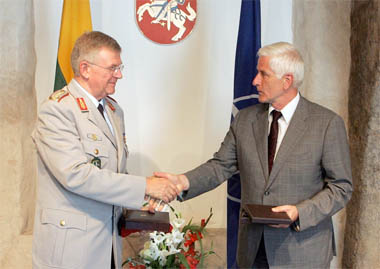
| Lithuania’s Foreign Minister invites world Lithuanians to help create a ‘Global Lithuania’ | 8 August 2010 |
During the convention of country chair-persons of the Lithuanian World Community and the Lithuanian Youth Union, Lithuania’s Minister of Foreign Affairs Audronius Ažubalis invited world Lithuanians to engage actively in the discussion on the strategy of “Global Lithuania”. “No strategy will be viable, if it is viewed as something imposed, and if it is not trusted. It will become a viable document and basis for our future actions only when we create and implement it together,” the Minister said during the opening of the convention. On 27 July, Lithuania’s Ministry of Foreign Affairs announced a public discussion regarding the “Global Lithuania” strategy. “Global Lithuania” is a strategic plan for developing ties between the state of Lithuania and part of the Lithuanian nation living abroad. The ties would be based on respect and partnership. The strategic plan has an objective to create preconditions for strengthening the Lithuanian identity in the global space. The strategy aims to include Lithuanians living abroad into Lithuania’s political, economic, cultural and social life, and to contribute to creating Lithuania’s welfare, progress and the development of national interests. Minister A.Ažubalis emphasized the importance of strengthening ties within the nation and the involvement of Lithuanians living abroad into the life of the country. “We share a task of existential importance to strengthen ties among our people and involve all of us in the process of state-building, regardless where we live or of what colour our passport is. Therefore, we all – the country’s institutions, organizations and world Lithuanians - have to aim to implement this task,” Minister A.Ažubalis noted. According to the Minister, an institutional framework has been designed to develop the ties between the state and Lithuanians living abroad: there is the Commission of the Seimas (Parliament) of the Republic of Lithuania and the Lithuanian World Community, and a commission for coordinating the affairs of Lithuanians living abroad chaired by the Prime Minister. Lithuania’s Ministry of Foreign Affairs and the network of diplomatic missions and consular points develop ties with Lithuanians living abroad. “We only have to fill the existing potential with a meaningful content,” the Minister said. On 29-30 July, the participants of annual convention discuss ways to include more compatriots living abroad into joint Lithuanian activities, to preserve the archives of Lithuanians living abroad, to maintain a magazine of world Lithuanians “Pasaulio lietuvis” and other issues that are important for Lithuanians living abroad. The convention is partly financed by Lithuania’s Ministry of Foreign Affairs. Currently, the Lithuanian World Community consists of local Lithuanian communities, registered in 41 countries worldwide. Over a million people of Lithuanian origin live all over the world, some of them are Lithuanian citizens. |
|
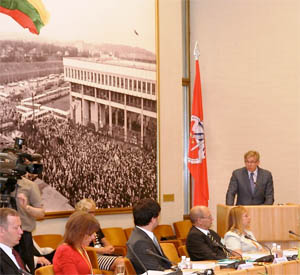
| Lithuanian Servicemen Break the Record | 8 August 2010 |
July 16-25, Lithuanian servicemen took part in the 35th CISM World Military Parachuting Championship in Bouchse, Switzerland. The Lithuanians took fourth place in the free fall event and broke Lithuania's record: they performed 30 formations in 35 seconds. Only Belgians, Germans and the Swiss were better than Lithuanians. |
|
| Plans to create Litvak Heritage Forum | 8 August 2010 |
A special working group discussed guidelines for the creation of the Litvak Heritage Forum (LHF). The group was established by the decision of Lithuania’s Prime Minister Andrius Kubilius. “Distinctive Litvak legacy was created over the centuries and it constitutes an integral part of Lithuania’s history and culture. We trust that not only our citizens in Lithuania, but also Litvaks living all around the world will be joint together by this noble initiative to preserve the Litvak heritage for the present and future generations,” head of the working group, Lithuania’s Vice-Minister of Foreign Affairs Šarūnas Adomavičius said during the meeting. The Vice-Minister noted that the Litvak Jews, who lived in Lithuania and also in the large region of Eastern and Central Europe, suffered terrible losses during the Holocaust, wars and occupations. According to the Vice-Minister, the treasures of culture, art and science that were created by Litvaks are priceless for Lithuania and all mankind. Therefore, we share an important moral obligation to foster this heritage. “The Litvak history, culture and contribution to the development of Lithuania and many other states are significant also today. The Litvak legacy has to be best-known in our society, especially to the youth, and promoted around the world as much as possible,” Vice-Minister Š.Adomavičius said. Members of the working group convened for their first meeting, which focused on basic guidelines for the creation of the Litvak Heritage Forum, they exchanged ideas on priorities of the forum and discussed organizational issues. Heads of the Lithuanian Jewish Community, Jewish Religious Community of Kaunas, Lithuanian Jewish Culture and Information Centre, Vilnius Yiddish Institute, International Commission for the Evaluation of the Crimes of the Nazi and Soviet Occupation Regimes in Lithuania and public consultants of the Prime Minister’s Office, representatives from the Seimas (Parliament), Ministry of Culture, Ministry of Education and Science, Ministry of Foreign Affairs and experts from other institutions will analyze suggestions and will create a concept of the Litvak Heritage Forum by 1 November. It will be presented to the Government of Lithuania, international Litvak organizations and the concerned public. |
|
| Lithuanian-Germans invited to foster ties with homeland | 8 August 2010 |
At a meeting with Lithuania’s ethnic Germans living in Germany, Lithuania’s Vice-Minister of Foreign Affairs Šarūnas Adomavičius encouraged them to maintain and strengthen ties with Lithuania. The Vice-Minister acquainted members of the organization “Landsmannschaft der Deutschen aus Litauen e. V.” (The Community of Germans from Lithuania) with today’s political, economic and cultural relations between Lithuania and Germany, and highlighted the most important bilateral activities. Vice-Minister Š.Adomavičius noted that Lithuania’s ethnic Germans living in Germany were a “human bridge linking the Lithuanian and German societies”, and invited them to engage more actively in the Lithuanian-German Forum that is well functioning. “I am convinced that besides the official and diplomatic level, the activities of the forum promote the spread of the idea: “more of Lithuania in Germany and more of Germany in Lithuania”. I would like to take the opportunity to encourage you to participate more actively in the activities of the forum in Germany and, in this way, to contribute to fostering relations with Lithuania,” the Vice-Minister said. The Organization “Landsmannschaft der Deutschen aus Litauen e. V.” was founded in 1951 in Germany. During the establishment, this organization united about 10 thousand members. Currently it has about 1 thousand members in entire Germany. Hardy Mett is the Chairman of the Community of Germans from Lithuania. The Community publishes a periodical Die Raute (The Rue) four times a year. It reviews the Lithuanian-German relations, Lithuania’s political news and activities of the community. The Almanac Heimatgruss (Homeland Greeting) is published once a year. Members of Lithuania’s Seimas (Parliament) and the Government, representatives from non-governmental organizations, diplomats from the Embassy of Germany in Lithuania also took part in the meeting with a group of Lithuania’s ethnic Germans who are paying a visit to Lithuania on 24 July - 3 August. |
|
| Every departing resident is a loss to Lithuania - Degutiene | 8 August 2010 |
Vilnius, July 29 (ELTA) - The Seimas Speaker welcomed the meeting of the Country Board Chairpersons of the Lithuanian World Community and the World Lithuanian Youth Association by referring to all those who have left their homeland and live elsewhere, but who have their hearts always with their homeland. The Seimas speaker stressed that emigration was one of the most painful topics in Lithuania as the country is abandoned by the greatest number of its residents compared with the neighbouring countries. "It is a matter of honour for the Lithuanian authorities to create conditions so that people would like to return and would have real possibilities of returning back to their homeland, seek ways to strengthen the relationship with our citizens who left, their children and grandchildren and to encourage them to think about the return, remain Lithuanians elsewhere and not to forget Lithuania. That is also a task for the World Lithuanian community," said Degutiene. The Seimas speaker also paid attention to the circumstances that prevented the adoption of a new version of the Law on Citizenship and vowed that the draft law would be included in the Seimas' agenda in the first week of the parliamentary autumn session. However, the Seimas speaker expressed her doubts as to the possibility of solving the citizenship issue without amending the Constitution itself. Foreign Minister Audronius Azubalis called on Lithuanians living abroad to be active in the discussion of the Globali Lietuva strategy. "No strategy is viable if it is viewed as something imposed, if it has no public confidence. It will become a real and productive document and basis for our future work only with our cooperation," the minister said during the meeting at the Seimas. The Lithuanian Foreign Ministry announced a public discussion of the Globali Lietuva strategy project on July 27. This project is a strategic plan for strengthening the relations between the Lithuanian diaspora abroad and the state of Lithuania. |
|
| International Human Rights Law Summer Study was held in Vilnius | 28 July 2010 |
The International Human Rights Law Summer Study (IHRLSS) took place on July 19-28, 2010 in Vilnius (Lithuania) with the participation of the Lithuanian Minister of Justice Remigijus Šimašius in the closing ceremony on July 28. The Summer Study is a two-week intensive program providing comprehensive exposure to International Human Rights Law. As a rapidly developing interdisciplinary field, International Human Rights Law is gaining importance in an increasingly globalized and ever more interconnected world. According to the Lithuanian Minister of Justice R. Šimašius, human rights and freedom is the basis and guarantee of democracy. It is one of the most relevant issues within sovereign countries and in the context of international relations. The implementation of universal human rights and freedom reinforces peace, provides security by preventing aggression, corruption and crime. Therefore, it is very important to improve legal system and develop international cooperation in order to provide security for people and allow for using their rights in any country. This year 31 students and 18 lecturers from Belarus, Canada, France, Georgia, Lithuania, Russia and the United States participated in the program. The program featured intensive classroom instruction with classes conducted by practitioners, professors, and experts in the fields of international and human rights law. Classroom instruction was enhanced by experiential components such as workshops, field work and site visits. The Summer Study was introduced in 2008 through a unique partnership involving the Elon University Center for Public Affairs (USA), NGO Bring Human Rights Home (USA), Human Rights Monitoring Institute (Lithuania), and Mykolas Romeris University (Lithuania). The European Humanities University (Belarus-Lithuania) joined the partnership in 2008. |
|
| Lithuanian citizenship cannot be taken away against person's will - World Lithuanian Community | 28 July 2010 |
Vilnius, July 28 (ELTA) - Representatives of the World Lithuanian Community do not seek to provide or maintain dual citizenship, however, they are against taking away Lithuanian citizenship against person's will. Chairman of the Board of the World Lithuanian Community Regina Narusiene says that the adoption of the Law on Citizenship takes a long time. According to her, the World Lithuanian Community is convinced that Lithuanian citizenship is an innate human right and the government cannot take it away. "We maintain the position that people of Lithuanian origin, who were born in Lithuania and have Lithuanian citizenship, have an innate right. And Lithuania cannot deprive them of this right. This is guaranteed by the Constitution, but somehow the lawyers did not take that into account. In our opinion, depriving those people, who left Lithuania after the year 1990, of Lithuanian citizenship and closing the doors for Lithuanian living abroad is against the interests of Lithuania," saif the chairman of the World Lithuanian Community. Naruseviciene is convinced that Lithuanians living abroad should keep in touch with their motherland through Lithuanian citizenship. As reported, on June 4, the Seimas decided to allow more people to have dual citizenship. Under the amendment to the Law on Citizenship, those people who departed from Lithuania after March 11, 1990 - the restoration of Lithuanian independence - will be able to have a dual citizenship, if they are of Lithuanian origin and if they have a citizenship of the European Union or North Atlantic Treaty Organizations country and live in a country that is separated from the Republic of Lithuania by a state border. |
|
| International naval exercise Baltic Bikini 2010 held in the Baltic Sea | 28 July 2010 |
Klaipeda, July 27 (ELTA) - The international naval exercise "Baltic Bikini 2010" was opened in Klaipeda on July 26. More than 70 airborne personnel of the Lithuanian, Latvian and Estonian Air Forces take part in the training event, the press service of the National Defence Ministry reports. During the exercise aircrews will train to abandon an aircraft after ditching, and drill their skills of using rescue equipment. In the active phase, aircrews will rely on their own strength and rescue equipment at hand to dive out of the cockpit of an imitation aircraft submerged 2 metres under water. The cockpit will be lowered from a ship following the pattern of ditching. After that participants will use rescue equipment to stay on water surface for around an hour waiting for the rescue helicopter. "Baltic Bikini" is organised by the Lithuanian Air Force, logistics of the exercise will be conducted by P-14 "Aukstaitis" of the Lithuanian Naval Force. Mi-8 on standby in the 1st Search and Rescue Post of Nemirseta will also participate in the exercise. Personnel of each Baltic State prepared for the exercise in their home countries. In the end of June airborne personnel of the Lithuanian Air Force's Airbase trained in Lake Gudeliai near Siauliai City. "Baltic Bikini" is held for the seventh time. International sea survival exercise has been held in one of the three Baltic States by rotation since 2004. It involves airborne personnel of Lithuanian, Latvian and Estonian Air Forces - pilots, loadmasters, technicians, military medics flying with search and rescue crews. The Baltic States lent the name of the training event from their Danish colleagues that organise "Baltic Bikini" annually. According to the order used in Denmark, each training or exercise team is denoted with one letter. The first "Baltic Bikini" training event was held in Denmark as a joint Baltic-Danish project. Under the project which was launched in 1999 Denmark handed over to Lithuania on a non-reimbursable basis a spectrum of rescuing equipment, trained aircraft crews to conduct rescue tasks, as well as rescuing instructors. From 2004 the Baltic States began arranging "Baltic Bikini" independently. |
|
| The President: The role of women leaders is important for democratic development | 28 July 2010 |
President Dalia Grybauskaitė received Eastern European political business and public women leaders. The representatives of many different professions, politicians, lawyers, journalists, and NGO members gathered in Vilnius for a conference on women's leadership organized by the International Republican Institute and the Community of Democracies. |
|
| President: Historical memory and continuity constitute the foundations of Lithuanian-US relationship | 28 July 2010 |
President Dalia Grybauskaitė sent a letter to the participants of the ceremony of unveiling a commemorative plaque in Washington Square in Vilnius to mark the seventieth anniversary of the US Department of State Declaration on the Non-Recognition of the Annexation of the Baltic States. |
|
| Best graduates honoured at Government | 28 July 2010 |
Vilnius, July 21 (ELTA) - On Wednesday, students who showed best results at maturity exams and graduates of vocational training institutions who showed best results at professional examinations were honoured at the Government. The students, their teachers and parents were congratulated by Prime Minister Andrius Kubilius. "You are investing your knowledge in your future. Investment in education always pays off," said the prime minister, wishing the graduates success in future studies and best of luck. 54 best students were presented with congratulation letters and commemorative gifts. Prime Minister Andrius Kubilius invited the best graduates to participate in the project of the Government, National Students' Academy, Lithuanian School Students' Union and Lithuanian Students' Parliament "Students - to the Government" on August 23-27. This project will allow students to get acquainted with the activities of the Government, public institutions and politicians, their daily work. The future politicians will have an opportunity to train at the Prime Minister's Office and ministries for one week, they will spend a day with the prime minister, monitor the Government sittings, attend various meetings, get acquainted with the structure of the Government and ministerial work. |
|
| Grunwald knights worth 30 Ferraris | 20 July 2010 |
Krakow, July 15 (ELTA) - Instead of paying his knights for fighting at the Battle of Grunwald, Polish King Jagiello could have bought thirty Ferrari 599 GTOs, Onet Biznes writes. The Polish King Jagiello (Jogaila) who commanded the joint Polish and Lithuanian army against the Teutonic Knights at the Battle of Grunwald in the year 1410 spent 30,000 grzywna to pay the knights, which amounts to approximately 37.5 million zloty (9.3 million euro) or an equivalent of thirty Ferrari 599 GTOs. "About 15,000-16,000 Teutonic Knights and 30,000 Polish and Lithuanian knights fought in the Battle of Grunwald," says historian Marek Janicki from Warsaw University. Although the Polish King had to spend a fortune to pays the knights, they themselves also had to bear high costs of the battle. A complete set of knight's armour cost up to 100 grzywny, which can be compared to the cost of 50 cows. A visor, for example, cost 4 grzywna, chainmail cost 2-7 grzywna, armour protecting one's torso 9 grzywna and armour protecting one's legs cost 4 grzywna. A shield was cheaper, costing 0.1-0.9 grzywna, an axe 0.75 grzywna and a bow 1.5-3.2 grzywna. The most expensive was a horse, which cost about 150 grzywna and a knight usually needed at least two horses - one for battle and another for carrying luggage. A knight also had to pay for food: during the four-month campaign which ended with the Battle of Grunwald, a knight probably spent about 3.5 grzywna on alimentation. A monthly pay of a medieval Polish knight amounted to 100 grzywna, the equivalent of about 1,980 zloty (500 euro). On average, a knight had to work for two years in order to afford a horse. In spite of rather moderate pay and high battle costs, knights usually managed to turn a profit from war spoils. "As many as 8,000 Teutonic Knights died in the Battle of Grunwald and they were well-armoured so Polish and Lithuanian knights had great loot," says historian Marek Janicki from the University of Warsaw. The Polish Royal Treasury was also replenished as a result of the battle. Under the Peace of Thorn in 1411, which ended the Polish-Lithuanian-Teutonic War, the Teutonic Order paid "sixty times the number of 100,000 Prague groschen or 20,000 kilograms of silver" in exchange for captives. "The sum was so high that the Teutonic Knights barely were able to raise the money," says Janicki. The Battle of Grunwald took place on 15 July 1410. It was one of the most important battles in Medieval Europe and the largest battle involving armoured knights. The forces of the Kingdom of Poland and the Grand Duchy of Lithuania were led by King Wladyslaw Jagiello (Jogaila), aided by Lithuanian Grand Duke Vytautas, and the Knights of the Teutonic Order by the Grand Master Ulrich von Jungingen. The battle was a complete defeat for the Teutonic Knights, who lost the area known as Dobrzyn Land and had to pay high war reparations. After the Battle of Grunwald, the Teutonic Knights were unable to recover their former might. |
|
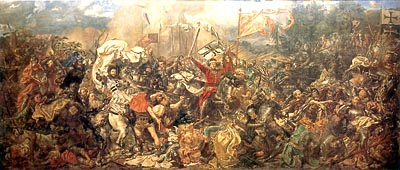
| Colonel Petkevičius Awarded Legion of Merit | 20 July 2010 |
Colonel Romualdas Petkevičius, the Lithuanian National Military Representative at Supreme Headquarters – Allied Powers Europe (SHAPE), was recently awarded the US Legion of Merit by Ambassador Anne E. Derse, in recognition of his service as Defense Attaché at the Lithuanian Embassy in Washington, DC from 2004 to 2008. The Legion of Merit, one of the United States’ highest military honors, is awarded for exceptionally meritorious conduct in the performance of outstanding services and achievements. Commenting on the importance of the award, Ambassador Derse said that “Colonel Petkevičius was instrumental in the full integration of Lithuanian forces in NATO during his time as Defense Attaché. His dedication to the alliance and hard work in building lines of communication between Washington and Vilnius helped to make Lithuania integral to 21st century security.” |
|
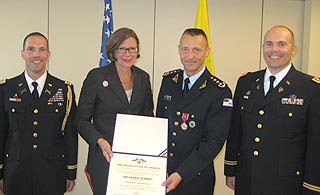
| Victory at Žalgiris stands as a symbol of hope, freedom and independence of Lithuanian people - President | 20 July 2010 |
Victory in the Battle of Grunwald (Žalgiris) stands as a symbol signifying the hope of the Lithuanian people to seek freedom and independence, President Dalia Grybauskaitė underlined at the celebration of the 600th Anniversary of the Grunwald Battle. |
|
| Kaunas HES to be named after Brazauskas | 20 July 2010 |
Vilnius, July 19 (ELTA) - It is proposed to eternalize the memory of deceased President Algirdas Mykolas Brazauskas by giving Kaunas Hidroelectric Plant his name. "This proposal sounds nice to me," Member of the Social Democratic Party leadership Ceslovas Jursenas told ELTA. According to him, there are various proposals on how to eternalize the name of the first president of the independent Lithuania. They will be considered by the party's leadership. Kaunas Hidroelectric Plant was Brazauskas' first employer. He got a job there in 1965, after graduating the then Kaunas Politechnic Institute. |
|
| The President: Only by working together can we cope with the situation in Lithuania | 17 July 2010 |
At a press conference held to review the first year of her term in office, President Dalia Grybauskaitė said that she, just like all the people of Lithuania, had had a difficult, painful and yet optimistic year. "It was a year of great personal responsibility placed by public expectations for a quality attitude towards work upon both the civil service and law enforcement institutions," the President said. |
|
| Algirdas Mykolas Brazauskas - in memorium | 17 July 2010 |
Photo: Lars Bryne
|
|
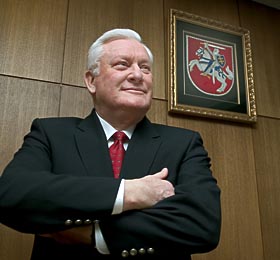
| Organic Products - Requirements of the EU | 17 July 2010 |
Logo and labelling It is designed to provide you with complete confidence that the goods you buy are produced entirely in-line with the EU organic farming Regulation, or in the case of imported goods, an equivalent or identical strict set of rules. Certification Conventional farmers must first undergo a conversion period of a minimum of two years before they can begin producing agricultural goods that can be marketed as organic. If they wish to produce both conventional and organic produce, they must clearly separate these two operations throughout every stage of production. Both farmers and processors must at all times respect the relevant rules contained in the EU Regulation. They are subject to inspections by EU inspection bodies or authorities to ensure their compliance with organic legislation. After the two year period successful operators are granted organic certification and their goods can be labelled as organic. Clarity “Any terms such as organic, bio, eco, etc., including terms used in trademarks, or practices used in labelling or advertising liable to mislead the consumer or user by suggesting that a product or its ingredients satisfy the requirements set out under this Regulation shall not be used for non-organic products.” In addition, the organic label can not be used for a product that contains Genetically Modified Organism (GMO). Indications
Logo So, consumers buying products bearing the EU logo can be confident that: The placement of the EU logo is mandatory from 1 July 2010 for pre-packaged food. It remains voluntary for imported products after this date. From 1 July 2010, where the Community logo is used, an indication of the place where the agricultural raw materials were farmed should accompany it. It should be indicated that the raw materials originate from 'EU Agriculture', 'non-EU Agriculture' or 'EU/non-EU Agriculture'. If all raw materials have been farmed in only one country, the name of this specific country, in or outside the EU, can be indicated instead. If operators wish to sell their products in another EU Member State than their own, they may place an additional national or private logo that will be recognised by the consumers of this particular country. However, the EU organic logo should in time be recognised by all European consumers. For more information: http://ec.europa.eu/agriculture/organic/splash_en Inspections • Inspection of documentation over purchases and sales, livestock and medication log books etc. Additional inspections and “on the spot” visits may also be carried out by inspectors for operators presenting more risks. Each EU Member State has established an inspection system and designated a number of public authorities and/or approved private inspection bodies to carry out the inspection and certification of organic production. Non-compliance |
|

| Commander of Lithuanian Land Forces awarded with military rank of major general | 11 July 2010 |
Vilnius, July 9 (ELTA) - On Friday, President Dalia Grybauskaite promoted the Commander of Lithuanian Land Forces, Brigadier General Jonas Vytautas Zukas, to the military rank of Major General. "The military rank of Major General is the evaluation of your honest service and long years of experience. You are one of the armed forces leaders and the founders of the restored Lithuanian army. I wish you not to forget the oath to defend the state of Lithuania, its freedom and independence that you took two decades ago, and to use your knowledge and experience gained during your service in training new soldiers, defenders of our country and its people," the head of state said. Zukas was appointed the commander of the Land Forces on 26 September 2007. He was assigned the rank of Brigadier General on 23 November 2007. The commander of the Lithuanian Armed Forces graduated from Vilnius University, the Bundeswehr Command Academy and the NATO Defense College. |
|
| 2011 proposed as year of Remembrance of Holocaust Victims - Degutiene | 11 July 2010 |
Vilnius, July 8 (ELTA) - A draft resolution, proposing to announce 2011 the year of Remembrance of Holocaust Victims in Lithuania, has been registered at the Seimas by 55 MPs belonging to different political parties. Seimas Speaker Irena Degutiene informed Israeli Foreign Minister Avigdor Lieberman, who is currently visiting Lithuania, about that. The draft resolution proposes the Government to draw up a programme for the year of the Remembrance of Holocaust Victims in Lithuania which would be dedicated to honour the Holocaust victims, to restore and immortalise the historical and cultural heritage of the Jews in Lithuania. The Seimas speaker pointed out that Lithuania had been implementing the unique in Europe Holocaust Education Programme for a decade almost. This programme has been presented by the Council of Europe as an example to follow for other countries. "The Holocaust education programme occupies a very important place in the Lithuanian education policy. Since 2002, the National Holocaust Education Programme has been implemented by building tolerance centres at schools, preparing teachers, drawing up education programmes and issuing publications," Degutiene said. During the meeting, the Israeli foreign minister also discussed restitution issues and thanked the Seimas speaker for Lithuania's decision to complete the process smoothly. |
|
| The number of overnight stays by foreigners decreased by 16.8% | 7 July 2010 |
Statistics Lithuania informs that, based on the data of the inbound tourism survey, the number of overnight trips of foreigners in 2009, compared to 2008, decreased by 16.8 per cent (from 1.6 million in 2008 to 1.3 million in 2009), that of same-day trips – by 6.6 per cent (from 2.8 million in 2008 to 2.7 million in 2009). Most foreign visitors with one or more overnight stays arrived in Lithuania for leisure (63.8 per cent), 36.2 per cent – for business purposes. In 2009, compared to 2008, the decrease in the number of business trips was not as large (-13.4 per cent) as that of leisure trips (-18.6 per cent). The larger portion of foreign visitors, were males, who accounted for 68 per cent of all tourists. The main source of information about Lithuania (indicated by 48 per cent of tourists) was friends and relatives. For every third tourist, it was the first visit to Lithuania. More than half of foreigners used road transport – 60 per cent (in 2008, 56 per cent); air transport was used by 31 per cent (in 2008, 36 per cent), rail transport – 6 per cent (in 2008, 6 per cent), sea transport – 3 per cent (in 2008, 2 per cent) of foreign tourists. In 2009, most overnight visitors arrived from Belarus (18 per cent, or 247.3 thous.), Russia (14 per cent, or 189.4 thous.), Latvia (11 per cent, o r 149.4 thous.), Poland (11 per cent, or 141.5 thous.), and Germany (10 per cent, or 135.2 thous.). In 2009, compared to 2008, the number of overnight trips from Belarus increased by 18.6 per cent. The largest impact on the decrease in the number of trips in 2009, compared to 2008, was made by a decrease in the number of trips from Poland – by 22 , Russia – by 16.7 , and Latvia – by 17.9 per cent. The number of trips to Lithuania from EU countries decreased by 21.3 per cent (in 2009, 777.4 thous.; in 2008, 988.3 thous.), from non-EU member states – by 9.5 per cent (in 2009, 563.6 thous.; in 2008, 623 thous.). Last year, the average duration of a foreigner’s trip to Lithuania amounted to 4.5 nights (in 2008, 4.9 nights). In 2009, compared to 2008, the number of longer trips (with 4 or more overnight stays) decreased by 17.5 per cent; such trips made up 26 per cent of all overnight trips. In 2009, the total number of overnight stays amounted to 6.1 million, and, compared to 2008, decreased by 23.1 per cent. In 2009, average expenditure per foreign overnight visitor in Lithuania amounted to about one thousand litas, which was by 12 per cent less than in 2008. The highest expenditure per tourist trip was recorded for tourists from Israel and United States – about LTL 2.2 thousand per trip with 9 overnight stays, the lowest – for tourists from Latvia and Estonia (on average, LTL 595 per trip with 3 overnight stays). In 2009, total expenditure incurred during trips with one or more overnight stays amounted to LTL 1.3 billion, which is by 27 per cent less than in 2008. Half (51 per cent) of foreign tourists indicated that they stayed in hotels and motels, 36 per cent – at relatives’ and friends’. The most popular places visited by foreign tourists were Vilnius – 66 per cent, Kaunas – 22 per cent, Klaipėda – 18 per cent, Trakai – 12, and Palanga – 9 per cent. Almost all (96 per cent) foreign tourists gave a very good or good assessment to their trips to Lithuania. Foreigners usually went on a same-day trip for shopping (35 per cent) or business (26 per cent). In 2009, same-day visitors in Lithuania spent LTL 809.2 million, which is by 10 per cent more than in 2008. Almost half (43 per cent) of expenditure was on shopping. Average expenditure of a foreigner per same-day trip amounted to LTL 304 (in 2008, LTL 316). In 2009, almost half of same-day visitors arrived from Latvia (1119.1 thousand, or 42 per cent), Poland (748.9 thousand, or 28 per cent), Belarus (284.8 thousand, or 11 per cent), Russia (226.9 thousand, or 9 per cent), and Estonia (154.1 thousand, or 6 per cent). |
|
| Degutiene proposes to declare 2013 the year of the 1863 January Uprising | 7 July 2010 |
Vilnius, June 30 (ELTA) - It is proposed to declare 2013 the year of the 1863 January Uprising. Seimas Speaker Irena Degutiene has registered a draft resolution at the Seimas’ Secretariat of Sittings after taking into account the fact that 2013 would see the 150th anniversary of the 1863 January Uprising. In this way it is expected to mark the historical and cultural significance of this uprising to the nations of Lithuania, Belarus and Poland. The draft resolution proposes that the Government should develop and approve the programme for the commemoration of the anniversary of the 1863 Uprising and provide for its funding. |
|
| President appoints Gelunas culture minister | 28 June 2010 |
Vilnius, June 28 (ELTA) - President Dalia Grybauskaite has signed a decree on the appointment of Arunas Gelunas as Lithuania's culture minister. The new culture minister was appointed after being nominated by Prime Minister Andrius Kubilius. Gelunas is yet to be sworn in at the Seimas. Next week, President Dalia Grybauskaite will present the candidature of Gelunas for the culture minister for the Seimas' approval. Last week, the president met with the candidate for the culture minister, pro-rector of Vilnius Academy of Arts Gelunas, to discuss the vision of the country's culture, the necessity of educating a creative society and improving the accessibility of culture to all the residents of Lithuania. According to Gelunas, he will continue the work that was started by his predecessor, Culture Minister Remigijus Vilkaitis, especially the one related to the culture of regions and the preservation of heritage. According to presidential spokesman Linas Balsys, the president assessed Gelunas' proposal to reduce the cultural divide among the major cities and regions of the country favourably. Grybauskaite believes that it is necessary to ensure the dissemination of a good-quality culture across the country and create equal conditions for the artistic self-expression of the people, awareness of the culture and promotion of the culture of their region. The new culture minister plans to set up a new cultural policy model, according to which, the Culture Ministry would form the cultural policy, but it would be conducted by the Culture Council which would be composed of Lithuanian experts. If necessary, foreign experts would be invited for consultations. Gelunas graduated from Vytautas Magnus University, earned a Ph.D. degree. In 1995-1997, he studied arts at the Tokyo University of the Arts, before that he was awarded a diploma of a graphic artist at Vilnius Academy of Arts. Since 2004, Gelunas has worked as a vice rector for studying at Vilnius Academy of Arts. He is also a member of the Lithuanian Artists' Association, and board chairman of the National Association of Creative and Cultural Industries. The candidate for the culture minister speaks five foreign languages: Russian, English, French, Polish and Japanese. Gelunas was proposed for the post in the wake of the resignation of Culture Minister Remigijus Vilkaitis. The Nation's Resurrection Party (TPP) decided to recall Vilkaitis from the post in April. Under the coalition's agreement, the post of the culture minister belongs to the said party. The TPP stated that they were dissatisfied with Vilkaitis because of the poor quality of his work and poor results of the ministry as well as the overall situation in the area of culture. |
|
| Midsummer Day - a great opportunity to get acquainted with Lithuanian traditions - Grybauskaite | 28 June 2010 |
Panevezys dstr, June 23 (ELTA) - Midsummer Day - a great opportunity to attract foreign tourists, to acquaint them with Lithuanian customs, cultural, national and culinary heritage, says the head of the state, who is celebrating Midsummer Day in Panevezys District. On Wednesday, Lithuanian President Dalia Grybauskaite took part in the Midsummer Day celebration in Panevezys District Rekstino forest, where she went by the Aukstaitija narrow gauge railway festive John's train. "The Midsummer Day - is a feast having a long tradition in many European countries. It is a good time to present the cultural, national and culinary heritage of Lithuania, get acquainted with unique Lithuanian customs and traditions. This feast has to be included and creatively presented in all programmes of cultural tourism," said the president. According to President Dalia Grybauskaite, the John's train organized by Aukstaitija narrow gauge railway and ceremony in Rekstino forest - is one of the most original events in the summer equinox that may be of interest and attract tourists not only from Lithuania but also from all over the world. |
|
| Outgoing US Naval Attache awarded with Medal of Merit | 28 June 2010 |
Vilnius, June 23 (ELTA) - On June 23, farewell ceremony for the outgoing US Naval Attache in Lithuania Cdr Tomas Algirdas Alksninis was held at the Ministry of National Defence. Vice Minister of National Defence Vytautas Umbrasas bestowed the Medal of Merit of the National Defence System on Cdr T. A. Alksninis for personal contribution and merits to development of cooperation between the Lithuanian and US Armed Forces, informs Ministry of National Defence. HE US Ambassador in Lithuania Anne Ellizabeth Derse, US Defence and Army Attache in Lithuania Lt Col David B. Millner, representatives of the Ministry of National Defence and Armed Forces participated in the ceremony. US Naval Attaché in Lithuania is based in Vilnius. Interest of the United States in Lithuania is also represented by the US Defence and Army Attache, the position is currently held by Lt Col D. Millner. The United States is one of Lithuania's key partners in defence area. Political support and military contribution the United States rendered under the Memorandum of Understanding on Lithuanian-US defence cooperation signed in 1994 had a major influence on Lithuania's success in entering NATO. USA actively supports reform of the Lithuanian Armed Forces, and ensures every support to Lithuania's troops deployed to multinational operations in Afghanistan and Iraq. Cooperation between the Lithuanian Armed Forces and the Pennsylvania Army National Guard gathered pace in the recent years, cooperation plans for events oriented at strengthening capabilities of the Lithuanian Armed Forces were ratified. USA and Lithuania also cooperates in arranging joint training with the Baltic States; Baltic Host 2010" held in the three Baltic capitals simultaneously to drill host country support capabilities in the beginning of June was an example. Another US-led international naval exercise taking place in the Baltic Sea on June 7-25 is Baltops 2010". This autumn joint training event of the US and Baltic land forces Sabre Strike" will be held in Latvia. Lithuania has invited USA to contribute its troops to the Amber Hope" exercise our country will host in 2011. US Air Force deployed two air contingents (in 2005 and 2008) to provide security in the Baltic skies since it joined the Baltic Air policing mission in 2005. The US Air Force is planned to guard the Baltic skies for the third time this autumn. According to an intensive cooperation schedule in training personnel of the Lithuanian National Defence System, around 500 Lithuanian representatives underwent training in military education institutions of the United States under the US International Military Training and Education Program endorsed in 1992. |
|
| Almost LTL28 million to be allocated for computer literacy development | 25 June 2010 |
Minister of Social Security and Labour Donatas Jankauskas signed an order, whereby LT 27.8 million has been allocated from the European Social Fund (ESF) for the implementation of computer literacy projects. These funds will be used for financing 13 projects targeted at the development of computer literacy skills of 48,000 people. “We are pleased with the fact that these projects will focus on older people (45 years and older) who lack knowledge of using computers and the Internet. Training will be offered for both residents of big cities and remote Lithuanian regions,” said Minister Jankauskas. When selecting the projects, a priority was also given to applications covering small towns and rural settlements, as well as those who have longer experience of relevant activities. The projects will be implemented in Lithuania by 2013 according to the “Development of Computer Literacy Skills” of the Operational Programme for the Development of Human Resources 2007–2013. This measure is aimed at the development of computer literacy skills applied in practice and related to the needs of a specific person in the labour market (to get employment, seek promotion, requalify), as well as the development of computer literacy skills necessary for a successful application of information and communication technologies in daily activities. |
|
| Three Lithuanian cadets win scholarships to prestigious US military service academies | 25 June 2010 |
Certificates of scholarships established by the United States for studies in prestigious US military academies were presented to three cadets of Gen. Jonas Žemaitis Lithuanian Military Academy. During the ceremony the cadets were congratulated by the US Ambassador Anne E. Derse, Commandant of the Military Academy Col. Gintaras Bagdonas, relatives of the cadets, and other guests. |
|
| US Embassy warns of visa scams | 25 June 2010 |
Riga, June 16 (LETA-ELTA) - United States (U.S.) Embassy in Riga advises the public to be cautious in dealing with individuals or companies that claim to offer assistance in obtaining U.S. work visas, LETA was informed by the embassy's press and culture department. The embassy warns that in particular, potential visa applicants should be wary of any promises by placement agencies or prospective employers to arrange for a work visa after travel to the United States. All legitimate U.S. work visas must be obtained at the embassy prior to entering the United States. Those who enter the United States on visa-free travel or on tourist/business visas, and who then take up employment in the United States, are violating the terms of their travel status and significantly jeopardizing their ability to obtain visas and travel to the United States in the future, the embassy points out. The U.S. Embassy in Riga is also concerned that potential visa applicants who receive deceptive information about U.S. visas may become targets of human traffickers. Human trafficking occurs whenever a person is recruited, transported, or kept against his or her will for the purposes of exploitation. U.S. Embassy in Riga strongly encourages residents of Latvia to exercise caution when accepting advice on U.S. visas from third parties not affiliated with the U.S. Government. The embassy does not endorse, recommend or sponsor any information or material shown on non-governmental web-sites that provide immigration- and visa-related information and services. To avoid being misled or deceived, the embassy strongly encourages each visa applicant to confirm the accuracy of information about U.S. visas or immigration procedures by accessing the U.S. Embassy in Riga website or the U.S. Department of State website. Potential applicants may also send the embassy an inquiry by e-mail at askconsular@usriga.lv, or contact its representatives by phone at 67 03 62 00. |
|
| Baltic ministers of environment sign new cooperation agreement | 25 June 2010 |
Gediminas Kazlauskas, the Lithuanian Minister of Environment, paid a visit to Dagda (Latvia) on 3 June to meet with his Latvian and Estonian colleagues. During the meeting of the Environmental Committee of the Baltic Council of Ministers (BCM), the minister of environment discussed marine environment issues and waste management problems (improvement of interstate waste transportation control, emphasising green and asphalt waste transportation control). The meeting addressed the National Plan for Allocating Tradable Allowances and renewable energy sources. The ministers also discussed the planned construction of nuclear power plants in Belarus and Kaliningrad. A new agreement among the three Baltic states on cooperation in the environmental area was also signed during the meeting. An agreement signed back on 21 July 1995 has been valid so far. However, it is no longer in line with the current situation and political context. The new agreement includes a provision encouraging raising common issues of national importance on European Union level and supporting their resolution. The purpose of the agreement is to continue tripartite cooperation in the areas of environmental protection and prevention of environmental pollution, develop economic, scientific and technical relations in order to solve regional and global ecological problems together. Regional environmental problems will be studied and more effective environmental protection measures will be sought in order to achieve this objective. The countries will regularly exchange information on the environmental condition, inform each other on emergency situations in the environmental area and will immediately take joint actions to eliminate their consequences. |
|
| Be2Gether Beckons on the last weekend of June | 17 June 2010 |
• Empire of the SunMusic and arts festival Be2Gether will take place on June 25 – 27 in Norviliškės. Around 50 different artists from all around the world will perform at Lithuania’s biggest festival. This year organizers are happy to present an interesting program for all music fans. The line-up includes such artists as Empire of the Sun, rockers Skunk Anansie, hip – hop stars Roots Manuva and Killa Kella with DJ First Rate, shocking Ruble and many others. The Big Stage program at Be2gether has such additions as acrobatic show actors Instrumenti, Belosrussian rock legend Liavon Volski and Open Space band. The festival organizers are also happy to present the modern jazz project BrassBastardz who have been captivating audiences with melodic sounds of soul, jungle, hip-hop, house, big beat and drum&bass. BrassBastardz call their mix “new groove acid jazz”. Festival club ZIP FM is presenting Be2gether Fresh program. It is featuring talented music projects by young artists, such as guests from Moscow, indie rockers Everything is made in China, stylish Gerai gerai & Miss Sheep, theatric and cool Liūdni Slibinai (Sad Dragons) , the winners of Blogiukai (Bad Guys) music competition – Vilnius band The Dominoes, progressive Avaspo and other unique artists. Dance music virtuosi will show the best turntable skills in the Club Tent. The Old School night program featurs all-night old school hip-hop with Svaras ir DJ Mamania projects Gatvės lyga soundsystem, Justas Fresh, Quazar, Manfredas, MC Messiah, Shidlas, Lietuva, Dee & Kamy, Repo seniai, the world’s most famous beatboxer Killa Kela and Dj First Rate. Silence family program will present Leon Somov & Jazzu, Vidis, Few Nolder, Monika Liu, Adomas, Mario Basanov. On Sunday the festival climax with the notes of Roko maršai (Rock Marches). Until late at night the big stages will host Bix, Antis, Žas, Poliarizuoti stiklai, Svastikos Sukitės Greitai, Freaks On Floor. You will also be able to watch the Paskutiniai Brėmeno muzikantai (The Last Bremen Musicians) presented by the Keistuolių teatras (Cranky Theatre). This year Be2Gether will also offer a movie night, football competition, anti-stress activities, on-site steam bath and exotic massages, a separate stage for art performances, the first Lithuanian space volleyball Bossaball tournament and a mass wedding. Even more information about Be2gether Festival can be found at www.b2g.lt A three-day festival pass costs LTL130, one-day pass LTL70. Ticket prices will rise after 25 May. |
|
| Dambrava honoured on 90th birthday | 14 June 2010 |
Vytautas Antanas Dambrava, considered by many to be the father of Lithuanian diplomacy, was honoured by friends and colleagues at the Ministry of Foreign Affairs recently. Born in 1920, Dambrava left Lithuania in 1944 making his way to the US where he worked as a journalist for the Voice of America as well as the Lithuanian newspaper Draugas. He joined the US diplomatic corps in 1969 and become head of Media Relations in the US Embassy in South America. When Lithuania restored its independence Dambrava was appointed Lithuanian Ambassador to Venezuela, Columbia, Argentina, Brazil and Uraguay, and from 1999 - 2004 was Lithuania's Ambassador to Spain, Morocco and Andora. Many friends and former ministers spoke about the influence Dambrava had upon their careers and praised him for his total commitment to his duties, as well as his endearing character. |
|
| Remembering Crimes Against Humanity | 13 June 2010 |
* Photo: Leonas Garbačauskas On 10 June in Washington, DC, Lithuania‘s Ambassador to the USA. Audrius Brūzga laid a wreath at the Monument to the Victims of Communism. The Ambassador attended a commemoratory event that was organized by the Victims of Communism Memorial Foundation. Foreign ambassadors of the countries that had suffered from Communism, representatives from non-governmental organizations and members of the US Congress took part in the ceremony. The goal of this commemoration is to remember the consequences of crimes against humanity, which have not yet been fully evaluated historically, and to honour the victims of this regime. |
|
| Degutiene shows interest in problems of Lithuanians living in Poland | 11 June 2010 |
Vilnius, June 11 (ELTA) - According to Speaker of the Seimas Irena Degutiene, who is currently on a one-day working visit to Poland, sufficient goodwill is vital in addressing the national minority issues. "I believe that upon resolving the problems at municipal level it will be easier to find common solutions at cross-border level," Irena Degutiene said on Friday after visiting Sejny, Nowiniki and Punsk. Speaker of the Seimas expressed hope she would be the last Lithuanian government official who had to raise these issue and that these problems would be left aside during the future visits. The Seimas speaker met with Ryszard Grzybowski, governor of the Sejny county and Marshal, Bialystok voivodship marshal Jaroslaw Dworzanski At the meeting, the problems of the Lithuanian minority in Poland, the maintenance of the Lithuanian school network and funding of these schools, the outstanding issues related to publishing of textbooks in the Lithuanian language were discussed. The Seimas speaker pointed out that it was not her first time in this region and that she knew very well the problems and concerns of its Lithuanian population. "Today I can say that there are changes for the better, however we are still facing old problems that could be easily overcome. Sometimes I do not even understand why they are not being solved," said Degutiene. During the visit, the Seimas speaker laid flowers at the graves of Lithuanian volunteers and Polish soldiers graves in the Berzniki cemetery. |
|
| Less children experience violence - Kondratas | 11 June 2010 |
Vilnius, June 11 (ELTA) - Although the number of children who experienced violence is decreasing, the problem still remains very acute, says Vice Minister of Social Security and Labour Skirma Kondartas. "The trends of the recent years clearly show that the number of children who experienced violence is decreasing, however, this does not mean that we have stop fighting against this phenomenon, especially now, when the adults feel insecure about tomorrow and can work off their angers and fears on the weak - the children," said Vice Minister of Social Security and Labour Skirma Kondratas. As every year, this year the social campaign "No to violence against children" is strengthening the public intolerance to violence against children. According to the report of the Ministry of Social Security and Labour, similar social campaigns have shown positive results. From 2004 to 2009 there was a consistent decrease in registered cases of violence against children. Last year, the number of registered cases of violence against children decreased by almost two times. It is noted that in recent years, public awareness has been increasing, and more and more children of different ages can identify violence and realize the damages related with violence. Also, more and more children dare to speak about violence and other problems that they face. This year's campaign "No to violence against children" is held in cooperation with the Lithuanian basketball federation and 2011 European Men's Basketball Organising Committee. Last week, a photo session of children and well-known basketball players was held during which the basketball stars and their little friends called everyone to say no to children violence. |
|
| Three collectable coins to be issued on 600th anniversary of Battle of Grunwald | 11 June 2010 |
Vilnius, June 10 (ELTA) - On the occasion of 600 anniversary of the Battle of Grundwald, the Bank of Lithuania will issue three collectible coins. On Thursday, the Board of the Bank of Lithuania announced the decision to issue three collectible coins: silver collectible (occasional) coin of the nominal 50 Lt, Golden collectible (occasional) coin of the nominal 500 lt, current (occasional) collectible coin of the nominal 1 litas. The graphics of the coins was designed by artist Rytas Jonas Belevicius, the coins were mint by UAB Lietuvos Monetu Kalykla. |
|
| Lithuania determined to continue supporting EHU | 3 June 2010 |
Vilnius, June 3 (ELTA) - Lithuania intends to continue its support to the Vilnius-based European Humanities University (EHU) until this education institution is able to be settled again in Minsk, country's Minister of Foreign Affairs Audronius Azubalis said on 2 June in Vilnius, addressing the participants of the third EHU Trust Fund Donor Assembly, informs Ministry of Foreign Affairs. According to the minister, Lithuania's decision to open the EHU in Vilnius was based on respect to democracy values, freedom and human rights, but the mission of the EHU is impossible without the support from partners. Minister Azubalis thanked the European Commission and the Nordic Council of Ministers, the biggest donors of the university, and expressed hope that the support of these institutions would not decrease in the future. "The EHU is one of the most prominent international projects of democracy promotion, and it became a reality because of your support", the Minister told the participants of the donor conference. Minister Azubalis also noted that the EHU is an important promoter of Belarusian culture and identity. Therefore, in the opinion of the head of Lithuania's diplomacy, it would make sense to teach more subjects in the Belarusian language, in addition to the existing studies of Belarus. In 2008, Trust Fund was established at the initiative of the European Commission. The fund aims to guarantee continuous funding to the EHU, it is administrated by the Nordic Council of Ministers, which makes payments for the activities of the university only according to the strategic plan and budget, that are adopted by the Governing Board of the EHU. Currently, the Trust Fund has become the main source of the EHU's financial stability. The fund is supported by the European Commission, Nordic Council of Ministers, the U.S.A., the Czech Republic, Denmark, Estonia, Finland, France, Greece, Ireland, Lithuania, Norway, Poland, Spain, and Sweden. Advisory Committee of the fund was established aiming to effectively attract funding from governments and private sources. Members of the committee are representatives of Estonia, Lithuania, Norway, and the U.S.A. The first Donor Assembly was held on 23 October 2008 in Brussels, the second was organized on 2 June 2009 in Vilnius. The third assembly was attended by representatives of the European Commission, Nordic Council of Ministers, McArthur Foundation, United States Agency for International Development, the EHU, the Czech Republic, Denmark, Estonia, Finland, France, Hungary, Ireland, the Netherlands, Norway, Poland, Sweden, and the U.S.A. The European Humanities University was originally based in Minsk, but in 2004 it was closed down for political reasons. At the invitation of the Government of Lithuania, the university moved to Vilnius in 2005. In 2006, it was granted the status of a Lithuanian university. Currently, it is has more than one and a half thousand Belarusian students. By inviting this Belarusian university to renew its activities in Vilnius, Lithuania undertook a commitment to support it. |
|
| Higher Education Reform | 3 June 2010 |
During the first year of the Law on Higher Education and Research in effect, major steps have been undertaken in order to modernise the system of higher education and research and implement the key objectives of the reform. They include the quality and accessibility of studies, development of modern technologies and putting an end to brain-drain. The reform is being carried out using financing from EU Structural Funds. The reform was launched when the Law on Higher Education and Research came into effect on May 12, 2009. The Law provided for the reform of legal status, management and funding of the state academic institutions. Starting 2009, the state allocates all the necessary funding, which is twice the amount prior to the reform, per one student. In 2010, the state plans to fund the studies of almost 19,000 first-year students, including 9,700 in universities and 9,200 in colleges. Around half of all the entrants will be able to study in universities and colleges for free. Direct investment into the quality of studies amounts to half a billion of the EU funds. Ensuring accessibility of studies Statistics have shown that a bigger percentage of state-funded places was won by entrants from provinces rather than major towns. Even at the time of a difficult economic situation social grants were not reduced and the circle of beneficiaries was widened. The created system of state-support loans makes the system more accessible for those who pay for the studies. The plan is to have the interest rate of loans, which depends on the overall economic situation of the state, to be less than 5 per cent. Improved admission procedures Adjustments have been made with respect to the organisation of admission to universities and colleges: applications will be sent online, admission to universities and colleges will take place at the same time and no fee will be collected for submitting an application. The number of student vouchers in business management and legal studies has been cut down taking into account the trends of previous years as well as the market needs. Special attention will be paid to the training of future pedagogues: there will be fewer student places but more funds allocated per student voucher; motivation assessment of entrants has been introduced and additional student grants will be provided. The admission procedure to art studies has been subject to adjustment: exceptional study programmes of arts will be provided targeted funding, the formula of special capacity assessment has been improved to make a clear differentiation between the best and mediocre examination results and define assessment criteria. Higher education establishments obtain full autonomy The new curriculum requirements open opportunities to shape a distinct separate profile of studies both for a school and a student. When the legal status and management of higher education establishments will be reformed by the end of 2011, state universities and colleges will gain the right to use their real estate and their earnings. The management of state universities and colleges will involve social representatives of broader public as well as the academic community. At present, the management and legal status has been already reformed by one university and one college. Lithuanian science is being directed towards the international market The network of research institutions has been optimised: prior to the reform there were 45 state education establishments operating. With common research trends combined, 17 institutions have been integrated into universities and the rest were combined into 5 research centres,6 other state research institutions were set up. The share of research funding on the basis of quality results has been increased: the ratio of basic funding against competition funding: 60/40 this year and 50/50 in 2011. The plan is that, after the reform is completed, investment in 2020 will amount to 2% of GDP. Currently, it accounts for 0.8% of GDP. Five integrated centres (valleys) of research, studies and business have laid grounds for a breakthrough in modern technologies. Projects amounting to over LTL1 billion will be carried out in valleys. The contracts for the projects have already been signed. A system of valley management and monitoring has been created. During the second year of the reform the following will be performed: monitoring of transparency and efficiency in the use of funds, supervision of follow-up reform, assessment and improvement. On the World Bank initiative, the experience of reforming higher education and research in Lithuania has been presented in international conferences and other countries have shown interest in it. |
|
| Global Internet Governance Forum to be held in Vilnius | 3 June 2010 |
“The Global Internet Governance Forum to be held in Vilnius provides a particular opportunity for presentation of Lithuania, as a modern country and increasing the influence on the management of social processes, as well as enhancing international business relations in the field of information and communication technologies, attracting the attention of potential investors”, said Vice-Minister Rimvydas Vaštakas. According to the Vice-Minister, increasing attention of politicians is necessary for the improvement of internet management, solution of contents development issues, safety and reliability problems. The Global Forum will provide an opportunity to instigate discussions regarding the above-mentioned problems and enable to make solutions meet future requirements and facilitate the tackling of problems in the future. The Global Internet Governance Forum in Vilnius is arranged by the United Nations Secretariat General and by Lithuanian partners – the Ministry of Transport and Communications and the Information Society Development Committee. |
|
| Happy childhood is basis for well-being and future of a child - Grybauskaitė | 1 June 2010 |
Vilnius, June 1 (ELTA) - On Tuesday, children gathered at the Daukantas Square near the Presidential Palace to express their thought for a childhood without violence and mockery in a 60-metre long picture. During the event, the actors of the Forumas theatre played sketches from the life of the young generation together with the children to show that the importance of a secure environment to children. The children presented their own book with their dreams to President Dalia Grybauskaite. The head of state emphasised that everyone were responsible for the welfare of children. Therefore, according to the head of state, everyone, including parents, guardians, teachers, governmental institutions, non-governmental organizations, the business sector and others, should show their personal example to others rather than declare the respect, tolerance, friendliness, good manners. "Children have a right to live without any fear, they have a right to say what they think, they have a right to play. However, few of them know their rights and can use them. Adults must protect children's interests, whereas children have to respects agreements and not to lie, to keep their word, to respect each other, not to mock at each other, not to litter and to cherish their environment," the head of state was cited by the presidential press service. |
|
| President: To preserve nature, we first have to change ourselves | 31 May 2010 |
• President Grybauskaitė with Dr Birutė Galdiakas. Photo: Džoja Gunda Barysaitė. President Dalia Grybauskaitė met with Dr. Birutė Galdikas, a well-known Lithuanian Canadian primatologist, conservationist, ethologist, and author of several books relating to the endangered orangutan. |
|
| Martyna Jatkauskaitė wins the Guildhall School Gold Medal | 17 May 2010 |
The Guildhall School is delighted to announce that 25 year old Lithuanian born pianist Martyna Jatkauskaite is the winner of this year’s Gold Medal, the School’s most prestigious prize for outstanding soloists. The prize presents a sum of 1000 pounds along with the gold medal, generously donated by The Worshipful Company of Musicians. The three Gold Medal finalists each performed a concerto with the Guildhall Symphony Orchestra conducted by Peter Stark to a capacity audience in the Barbican Hall on Wednesday 5 May. The other two finalists were Romanian born Diana Ionescu, pianist, and Irish cellist Brian O’Kane. Martyna Jatkauskaite’s winning performance was Prokofiev Concerto No 3 in C Op 26. Martyna was awarded the prestigious Baltic State Scholarship in 2005 to study at the Guildhall School of Music & Drama with Joan Havill. She received a first class Bachelors Diploma in Music with Honours (2007) and completed her Masters Degree of Music in Music Performance (2009); Martyna is now a Fellow at the Guildhall School. The final took place before a distinguished panel of judges including Jonathan Vaughan, Director of Music at the Guildhall School, conductor James Gaffigan who is Chief Conductor of the Lucerne Symphony Orchestra and Principal Guest conductor of the Netherlands Radio Philharmonic Orchestra, conductor Peter Stark who conducts a number of the world’s leading ensembles, Nicholas Mathias who is Senior Vice-President and Co-Director of the Conductors and Instrumentalists Department at IMG Artists, journalist Tom Service who writes for The Guardian and BBC Music Magazine, and is presenter of BBC Radio 3 Music Matters. Lithuanian-born pianist Martyna Jatkauskaite leads an active concert life as a soloist in England and Europe. She has appeared as a soloist with the Lithuanian National Symphony Orchestra, the Lithuania Chamber Orchestra, the Kaunas Symphony Orchestra, the Guildhall Symphony Orchestra and the London Festival Orchestra among others, under esteemed conductors such as Saulius Sondeckis, Modestas Pitrenas, Vasily Petrenko, Espen Selvik, Ovidiu Balan and Ross Pople. Martyna’s musical journey started at the Kaunas J. Naujalis Music College where she studied with Birute Kumpikiene, and later with Veronika Vitaite at the Lithuanian Music and Drama Academy. In 2005 Martyna was awarded the prestigious Baltic State Scholarship to study at the Guildhall School of Music & Drama with Joan Havill. Martyna received a first class Bachelors Diploma in Music with Honours (2007) and completed her Masters Degree of Music in Music Performance (2009). Martyna is now a Fellow at the Guildhall School. |
|
| Joint Lithuania-Polish History Researched | 17 May 2010 |
Vilnius, May 14 (ELTA) - On 12 May, a round table discussion "Through Exploring the Past we Shape the Future" was held at the Lithuanian Embassy in Warsaw. The Lithuanian Institute of History organized the discussion in cooperation with the History Institute of the Polish Academy of Sciences. The Lithuanian and Polish parliamentarians, historians, journalists, representatives from Foreign Ministries and Lithuanian diplomats took part in the discussion. At the beginning of the event, greetings of Lithuanian Minister of Foreign Affairs Audronius Azubalis were conveyed to the participants of the discussion, informs Lithuanian Ministry of Foreign Affairs. "Through mutual cooperation in a united Europe, Lithuania and Poland must benefit from our rich heritage, develop an objective and open attitude to the past, and admit that even when dealing with complicated periods of our history, we need an open and sincere dialogue. I trust that this event will be another important step towards a common approach, which will allow us to gain better understanding of the glorious historic past of our nations," Lithuania's Minister of Foreign Affairs wrote in his congratulatory letter. The discussion "Cooperation between Lithuanian and Polish historians over the past twenty years and its prospects" started with opening speeches by Prof. Andrzej Rachuba from the History Institute of the Polish Academy of Sciences and Dr. Rimantas Miknys from the Lithuanian Institute of History. During the discussion, intensive contacts between the historians of our two countries were evaluated. However, the importance to institutionalize the cooperation of historians was highlighted. A possibility to establish a History Commission of the two countries was discussed. Chairman of the Committee on Foreign Affairs of the Seimas (Parliament) Emanuelis Zingeris and Chairman of the Group for Parliamentary Relations with the Republic of Lithuania of the Sejm of the Republic of Poland Tadeusz Aziewicz spoke during the second part of the event, which was called "Impact of joint history research on current bilateral relations". T.Aziewicz stressed the necessity to fight with myths and stereotypes that harm the Lithuanian-Polish relations. The participants of the discussion underlined the necessity for Lithuania and Poland to research history more intensively, including the events in the 20th century history that are painful to both nations. |
|
| Brave Word: speaking out against corruption through film | 3 May 2010 |
This week, 3-7 May, “Transparency International” Lithuanian Chapter (TILS) is organizing the corruption themed film festival ‘Brave Word’. It will be held at Pasaka. Šv.Ignoto 3/4, Vilnius The Brave Word program will include movies by famous directors Martin Scorsese, Steven Soderbergh, Jose Padilha and Tony Gilroy; and will try to highlight their hidden meaning, as sensitive social issues are lurking in the background of each film. All the films in the programme of the festival reveal what corruption is, how it showcases itself in our lives, also what are the causes and consequences of this phenomena. Through these films the organizers aim to show that there is one main weapon against corruption, which is the courage to speak up.
Entrance to all screenings is free of charge. |
|

| Metallica Rocks 'em | 2 May 2010 |
* Photo: Minduagas Kulbis Metallica wowed them in Lithuania recently with two concerts in Vilnius. Scheduled in the middle of the volcanic mayhem, the band had to travel to Lithuania by ferry and bus from Oslo. The bus trip was the hardest of the 28 hour journey to Riga, not physically, but more of an emotional stress because 20 years ago then bassist Cliff Burton died when the Metallica tour bus at the time skidded and flipped in Sweden. Ever the hardened professionals, Kirk Hammett led a heavy metal assault on the senses of Vilnius faithful with the aid of another eight busloads of sound and stage equipment that was much appreciated by both the young and old in the audience for the aging rockers.
* Photo: Mindaugas Kulbis |
|
| Lithuania and Latvia win US robot championship | 2 May 2010 |
Riga, April 26 (NOZARE.LV-ELTA) - The representatives of Latvia and Lithuania dominated the world's biggest open robot championships in the U.S. city of San Fransisco, the business portal "Nozare.lv" was informed by Vitolds Birins, creative director of the firm "Terra Virtuala". In the event, which featured the largest autonomous (not remote controlled) sumo robots - the two Baltic countries took the first four places, with first and third places both going to reigning European champion Vitalij Rodnov, of Lithuania. Latvia's robot engineers have won their first silver medal. According to Birins, this was Latvia's first year in the "Robogames" competition, also known as the "Robot Olympics", which sees participation from 37 countries worldwide. Between April 23 and 25, more than 500 robots faced off in 53 different disciplines. The robots played bowling, football, and hockey, took part in tests of dexterity, speed, power and orientation, as well as in kung-fu, sumo and paintball battles. More romantically inclined robots also painted and played musical instruments. The most useful discipline for the audience was perhaps the robotic barman competition, but the most adrenaline-stimulating event was the robot wars "almost without rules", which took place in a special ring behind a reinforced glass screen, indicated Birins. Around 700 engineers from all over the world traveled to San Fransisco along with the robots. The honor of Latvia was defended at the competition by four robots built by Maris Abele from the Riga Technical University and Eriks Zaharans from the University of Latvia. Abele's robot "Tacka" won silver in the 3 kilogram robot sumo event, while another Latvian robot came fourth in the same event, said Birins. |
|
| Eastern European Funk | 14 April 2010 |
* Photo: Algis Kriščiūnas Inculto will be representing Lithuania’s honour at this year’s Eurovision. Eastern European Funk is the song that will carry the nation’s pride to the Eurovision finals which will be held between 25 – 29 May in Oslo, Norway. Jurgis Didžiulis, the Columbian-born lead singer of Inculto takes his particular mix of talent and energy to Eurovision for the first time, after being overshadowed by LT United a few years back with their equally deserving entry; Welcome to Lithuania. Didžiulis and Inculto made quite an impression in the finals of Lithuanian qualifying for Eurovision this year by ending their performance devoid of pants and revealing their glittering silver boxers as a finale. While showmanship and schmaltz are the cornerstones of Eurovision, Inculto, and Didžiulis in particular, are far from the single dimensioned performers that usually fill the bill at Eurovision. Inculto have also managed to bring a bit of politics into Eurovision, with their song lyrics being scrutinised by various authorities to ensure their ‘suitablitity’ for the contest. In part, the lyrics include: “Yes Sir we are legal we are, though we are not as legal as you/No Sir we’re not equal no, though we are both from the EU/We build your homes and wash your dishes,/Keep you your hands all soft and clean/But one of these days you’ll realize Eastern Europe is in your genes”. Further they promise to bring their instruments, play live and get the audience dancing, instead of relying solely on the pre-recorded fluff that is so necessary in the heavily choreographed bits of theatre most countries bring to the stage. Here’s hoping that he’ll go a few better than LT United’s sixth place a few years ago, or for bragging rights at home, better the 13th place that Didžiulis’ wife Erica Jennings took with Skamp back in 2001. |
|

| Vykintas Každailis and team win two BAFTA awards | 14 April 2010 |
The Butterflyers team, made up of five programmers and artists, picked up the “Ones to Watch” prize at the BAFTA Videogames Awards Ceremony in London recently. The team also took the Best Game prize at the BAFTA Scotland New Talent Awards in Glasgow for their game ‘Shrunk’– an imaginative and unusual fantasy in which players are reduced to the size of a salt shaker to battle against Dr Shockalot and to rescue the Kleinoscope – a device which miniaturizes the world around you at will. “We’re overwhelmed, but so happy. The competition was so tough and the other teams were just brilliant. To win one BAFTA is very special, but to win two in one night is just fantastic,” said Vykintas Každailis, Butterflyers’ team leader and son of the well-known Lithuanian artist Arvydas Každailis. Vykintas was in London with team-mates Andrew Macdonald, Jacek Wernikowski, Stuart Kemp, and Michael Cummings to receive the “Ones to Watch” BAFTA, while close friend Iain Smith attended the BAFTA Scotland event in Glasgow to receive the Best Game trophy on The Butterflyers’ behalf. There was a surprising twist to the London ceremony, because winning team member Andrew Macdonald had in fact designed the “Ones to Watch” trophy three years ago when the award was first established. |
|
| Lithuania and the Collapse of the USSR by Jonas Mekas |
Forces of time, memory, change, and humans collide in Jonas Mekas’ compelling work - Lithuania and the Collapse of the USSR (2008). The work’s title refers to the time when the world watched as Mekas’ home country of Lithuania fought for independence from Soviet rule. Comprised of four parts with a total running time of 4 hours and 46 minutes, it will be presented in four parts at the Gilmorehill 12 in Glasgow from 13 March 2010. The film will be introduced by Louis Benassi, curator, artist and filmmaker and Professor David Smith, Head of the Department of Central and East European studies, Glasgow University. The screening will be followed by a Q&A session. The screenings have been organized in collaboration with CRCEES (Centre for Russian, Central and East European studies) Glasgow University, the Lithuanian Embassy in the UK and the Ministry of Culture of the Republic of Lithuania. Admission is free. More info at: boxoffice@gilmorehillg12.co.uk |
| Kino Pavasaris promises 15 days of good cinema |
On its 15th anniversary, the organizers of Kino Pavasaris are promising an even more extensive and diverse festival and event programme this year. The festival will expand into three theatres and show on seven screens. As usual all films will screen not just in Vilnius, but Kaunas, Klaipeda, Panevezys and Siauliai as well. Kino Pavasaris is the biggest cinema event of the year and is attended by 50,000 people each year. Over 100 films will be screened from Europe and all over the world. Altogether 400,000 people have come to see good quality films in the last 15 years of the Vilnius International Film festival “Kino Pavasaris”. |
| Famous Lithuanian artists promote us best - President |
"Lithuania is rich in internationally renowned artists. By presenting the path of our artistic pilgrims to the world - which would include exhibitions covering the works by such famous Lithuanians such as Mikalojus Konstantinas Čiurlionis, Vytautas Kasiulis, Kazimieras Žuromskis, Kazys Varnelis and Antanas Montis - Lithuania would become even more attractive to tourists. “This idea could be driven forward by the ministries that promote tourism, the Ministry of Culture and the Ministry of Economy," President Dalia Grybauskaitė said when she visited the Vytautas Kasiulis International Exhibition ‘Gardens of Paradise’. According to the President, we have been offered a unique opportunity to get a better insight into the creative work of Vytautas Kasiulis - a talented Lithuanian émigré, yet not very well known in his home country. The President said the fact that his widow provided the Vilnius Picture Gallery with Kasiulis' paintings from her private collection was a gift of great value to all of us who are not indifferent to one of the most interesting painters of the Paris School. Vytautas Kasiulis is among the few Lithuanian artists to have earned recognition on the global art scene. His paintings have been bought by art galleries across the world and by private art collectors. More than 150 of his works are presently on display at the Vilnius Picture Gallery. |
| Lithuania to Host Baltic Youth |
In July 2009 Lithuania assumed the Presidency of the Council of the Baltic Sea States. Traditionally each Presidency holds an event that is dedicated especially for youth. This year Lithuania will host the Lithuanian Youth Council (LiJOT) – the country’s largest non-governmental body that brings youth organizations under one umbrella. It is expected that between 13-16 May, about 150 14-29 year olds will gather for B-Young event in Vilnius. There will be participants from all the member countries of the Council: Belarus, Denmark, Estonia, Finland, Germany, Iceland, Latvia, Lithuania, Norway, Poland, Russia and Sweden. The goal of the event is to provide young people with an opportunity to present the best youth projects and initiatives, and also to learn from each other, to discuss current topical issues for young people, to present their suggestions, and recommendations for the member countries of the Council of the Baltic Sea States. During the event, there will be 12 different working groups, where young people will discuss the mobility of young people, Baltic identity, ecology, entrepreneurship, co-operation and other issues. The participants of the event intend to adopt the Youth Declaration, which would provide representatives from the authorities of region’s countries and businesses with suggestions how to address youth problems more actively. Youth organizations are invited to register, actively offer ideas and select projects that were implemented with the greatest success. |
| The Nordic Council Of Ministers Support The European Humanities University |
During his visit to the European Humanities University (EHU) in Vilnius together with representatives of the Nordic Council of Ministers on 18 February, Lithuania’s Minister of Foreign Affairs Audronius Ažubalis thanked the European Commission and the Nordic Council of Ministers for their continuous support of the university. During the discussions with students, the Minister stressed that Lithuania, being a close neighbour of Belarus, fully understood the situation and the expectations of people in Belarus. According to the Minister, Lithuania is ready to support any steps of Belarus towards Europe. “We do not expect that the country’s democratization and liberalization of economy will happen overnight,” Minister Ažubalis said highlighting that an independent, stable Belarus with a free market and moving towards the consolidation of an open democratic society was in the interests of Lithuania and the EU. |
| Lithuania Breeds ‘em Tough |
* Text: Ray Vyšniauskas The perennial favourite filler on the news is the granny who takes her first skydive on her hundredth birthday. It’s always a woman, and the newsreader, nearly always a man, comments that he’d love to be that sprightly at her age. You see these x-gen grannies, but I’ll tell you now that they’re no match for our own Lithuanian pensioners. You see these grannies in the West, and they are so tightly secured to an instructor and are required to do nothing other than have a nap, and you feel the instructor could jump from 10,000 feet with a goldfish bowl and not spill a drop. The granny always says something like: “That was fun and I can’t wait to do it again.” But let’s face it, she’s only saying that because likely she has slept through the whole thing, and it was only the camera crew that woke her up for the interview. I would like to see a granny really go for it. I would even settle for an 80 year old say, standing by the open door of a plane and throwing her parachute out first, and having to jump after it, put it on and pull the rip-cord before hitting the ground, now that would be something to see. But where to find such grannies? Well I see them everyday here in Lithuania. They may be frail looking, but these girls are tough, and that’s why I was a bit worried recently when the pensioners had a few protests against the government – they could have made the riots in front of parliament in 2009 look like a kindergarten playground. I’ve seen them on busses that lean more than most motorbikes as they tear through town and country. As I hang on for dear life I see the faces of these grannies, my fellow passengers, no concern for their safety, simply picking up the odd potato that centrifugal force sends flying across the aisle. In fact I try to position myself between a couple of them as makeshift airbags as they stand in their huge fur coats. I can see in their eyes that they are not thinking of their own safety, instead wondering why the bus is going so slow. I see these grannies in the streets. In the snow I’m not used to walking on frozen ground, and shuffle down the ice lanes as if my pants have been poohed and I hold on to any walls I can reach. Just to mock me the grannies go zooming past, impatiently nudging me aside as they speed off over the horizon in front of me. They carry a week’s grocery shopping and usually they travel in packs. And you get between a gang of grannies and a sale of cucumbers or tomatoes at the market and you will know the feeling of running with the bulls. And how do they breed them so tough? Well in the land of pork, potatoes and pints they teach them discipline. How else would Lithuania girls have the lowest body fat index in the EU? They send them out in the snow, on cobblestone streets covered in ice – in high heels. And then there’s the legendary goat training. Don’t know what I’m talking about? Well read on, maybe you remember this story from a couple of years ago that was widely reported around the world: Miss Popova from Klaipėda was 93 years old, but not quite as frail as she looked and shocked two young robbers by fighting back fiercely and grabbing one of them by the testicles. The plucky pensioner, who says she developed a “grip like iron” due to her many years of milking goats, held on tightly until police arrived on the scene to rescue the whimpering man. She told police: “He started screaming like an animal and his friend was trying to pull him free, but I have a grip like iron.” When officers arrived Miss Popova, who still had the man’s wedding tackle tightly in her grip, finally released her prey so police could take the injured man to hospital and his accomplice off to jail. A police spokesman said: “They would not have got far, one of them could hardly walk and seemed pleased when he saw the police car.” |
| Sir Roger Moore in Vilnius Again |
Sir Roger Moore made his second visit to Vilnius, this time to attend a concert at the Philharmonic which he himself suggested and helped organise. He also attended a charity dinner, both in his role as UNICEF ambassador. During Roger’s first visit to Vilnius in May 2009 he suggested to UNICEF staff that he could help organise a concert with Itamar Golan and Julian Rachlin, who were both born in Vilnius. Sir Roger works with these classic musicians regularly and was instrumental in bringing them to Vilnius along with Richard Hyung-ki Joo and Aleksey Igudesman. President Dalia Grybauskaitė attended both events as patron and stressed the importance of raising funds for the construction of schools in the Ghor Province where Lithuania leads reconstruction efforts. Sir Roger and wife Kristina Tholstrup enjoyed their second visit to Vilnius, though they were somewhat surprised by the especially cold weather. |
| IWAV Food Drive |
The International Women’s Association of Vilnius (IWAV) recently held an action to collect food for the needy in our society. In conjunction with Prisma at the Ozas Shopping Centre, IWAV volunteered their services to collect donations of food to be given to Mother Teresa Sisters of Charity Shelter, the village of Dailidės and the Village of Rudiškės. The public responded generously and IWAV were already well on their way to collecting the 1000 kilogram target of food that they were aiming for by the Saturday. The children of IWAV members and supporters were also eager volunteers and worked tirelessly throughout the whole weekend to make the event a success. |
| New Board for World Lithuanian Youth Association |
The new World Lithuanian Youth Association (Pasaulio Lietuviu Jaunimo Sajunga or PLJS) board was elected in South America during the 13th Congress recently, and comprises: Kęstas Pikūnas (pictured - UK, Chair), Martynas Gaurilčikas (Germany), Juan Ignacio Forment Kalvelis (Argentina), Giedrė Kazlauskaitė (USA), Stasys Kuliavas (Canada), Saulius Simonavičius (Canada), Petras Vaičiūnas (Canada), Nicolas Velo (Uruguay). The next and 14th Congress will be held in the UK in the summer 2013. One more member was added to the board later, a representative from the UK and head of the organization committee: Karolis Adomaitis. |
| Woven Sash Symbolises 20 Years of Independence |
The slogan ‘Believe in Freedom’ and the stylized pattern of a woven Lithuanian sash will symbolise the twentieth anniversary of the Re-establishment of Lithuania’s Independence. The pattern is the main graphic symbol in the logo of the anniversary, which is celebrated this year. Believe in Freedom reflects the main value which united the Lithuanian nation and helped it to keep alive the aspiration to re-establish statehood and led towards the 11th of March 1990. For the creation of the logo, designer Giedrė Jaronytė used the colours of the Lithuanian national flag, which represent the country’s traditions, values and freedom. The tiniest graphic elements of the logo - rectangles and squares – form a pattern with traditional motifs, and alludes to modern technologies such as a digital code. The original and modern expression of motifs from Lithuanian folk-art in the logo points to the innovative state of Lithuania. The logo will be used during the events marking the twentieth anniversary of the 11th of March, also in publications, posters, media and internet, on souvenirs and document forms of state institutions. |
| Lithuanian jazz power team plays at 606 and Charlie Wrights International |
10 and 11 February, 2009. Leonid Shinkarenko, an acoustic and electric bass virtuoso, and his band Jazz 4 are appearing at 606 club on 10th February and at Charlie Wrights International on 11th February. Next to the leader of the band Leonid Shinkarenko, the concert features one of the best jazz trumpet players in Lithuania Valerijus Ramoška, pianist ‘one man orchestra’ Dainius Pulauskas and the drummer Linas Būda. The concert is presented in collaboration with the Lithuanian Embassy in London, Star 1 airlines and Lithuanian weekly Londono žinios. |
| Another Burns Night Success |
The fearsome Saor Patrol stole the show bringing the unique sound of Scottish pipes and drums into the 21st century at the 11th Annual Burns Night, a traditional charity event held at Vilniaus Rotušė (Town Hall) on Saturday 30 January. The Gala Charity ball and raffle, drawn by Rūta Mikelkevičiūtė, raised over LTL15,000 for Mamu Unija Foundation, which supports parents of children with cancer in Lithuania. The event was attended by 230 guest who were treated to fine Hag-gis (traditional Scottish dish) and ceilidh dancing with the Benach-ally Ceilidh band. |
| Cultural Capitals move on |
Essen, Pécs and Istanbul celebrate their debut as European capitals of culture Taking over from Linz (Austria) and Vilnius (Lithuania), the three have put together a packed programme of events that should attract tens of thousands of visitors. This year marks the 25th anniversary of the EU’s culture capital programme. Events must reflect the city’s European character and directly involve residents. They must also promote the cities’ overall development. To that end, each ‘capital’ receives €1.5m in EU funds. Organisers of the Ruhr programme hope to contribute to the revival of the heavily urbanised area in western Germany - home to well over 7 mil-lion people. Istanbul is playing up its history as a crossroads of European civilisation and a bridge between Europe and Asia, and the Hungarian city of Pécs is highlighting its rich multicultural heritage. |
| Eurovision |
On the last day of the last decade, Lithuanian National Television announced that Lithuania will indeed be participating in Eurovision. Thanks to TEO LT, who put up the finances to ensure our participation, a Lithuanian delegation will head to Norway to compete in the annual European celebration of schmultz. It was also announced that anyone interested in representing Lithuania in Norway will need to lodge their applications with Lithuanian National Television by 24 January. All songs need to be originals, less than three minutes long and cannot have been publicly broadcast before 1 September 2009. The selection process of our representative song will take place in February and March. The Eurovision semi-final will be in Oslo 25 – 27 May and the final on 29 May. |

| Landsbergis and Brazauskas awarded The Star of Lithuania’s Millennium |
On 31 December, Minister of Foreign Affairs Vygaudas Ušackas awarded ‘The Star of Lithuania’s Millennium’ for special personal contribution to the restoration of an independent Lithuania’s diplomatic service, strengthening of Lithuanian statehood and merits of promoting Lithuania’s name on Vytautas Landsbergis, Speaker of the Reconstituent Seimas, member of European Parliament and Algirdas Mykolas Brazauskas, President of Lithuania. While conferring the awards, the Minister stressed that the last day of the year dedicated to the celebration of Lithuania’s Millennium, in the junction of two important years, when Lithuania’s millennium is met by the 20th anniversary of Lithuania’s independence, to pay tribute to two most meritorious persons in Lithuania.
The Minister said that during the years of Mr Landsbergis and Mr Brazauskas leadership many diplomatic goals important for Lithuania were achieved: international recognition, withdrawal of a foreign army, agreements on Lithuania’s state border demarcation with the neighbouring countries were signed, friendly relations with Poland were established and strengthened, the recognition of historical truth was achieved, as well as the normalisation of relations with the world Jewish community and Israel, the US-Baltic Charter was signed, paving the way for our country’s membership in NATO, the country’s modernization, and membership in the European Union. “Fate has been generous to Lithuania, to have these persons leading Lithuania during its return to the world and strengthening its diplomatic service. Time is running out fast. These achievements may appear or seem for many diplomats of the younger generation as usual or natural ones. However, as President Valdas Adamkus was conferred with ‘The Star of Lithuania’s Millennium’ in June for his contribution to Lithuanian diplomacy, I said that nothing comes of nothing. Lithuania’s achievements needed a vision, the determination, the courage, the ingenuity and the commitment. You have embodied all these features,” Minister Ušackas said. |
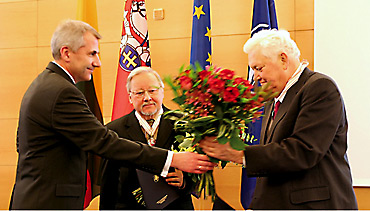
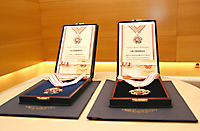
| The Colour Photographer - Mečys Brazaitis at the Lithuanian Embassy in London |
8 January – 6 March, 2010. Lithuanian Embassy in London presents the colour photographs of Mečys Brazaitis (1903-1952), a Lithuanian military pilot with the rank of captain, topographer, and photographer, whose photographs take us back to the end of the 1930s, a period when the first colour photography methods were established and flourished. The exhibition by Mečys Brazaitis beautifully shows not only the characteristics of Lithuanian colour photography that reflect the spirit of the times, but also the first signs of a long period of change in photographic culture. Despite the fact that at the time the technical capabilities to print a colour image on photographic paper did not yet exist, Brazaitis not only carefully studied the technical possibilities of colour photography, but also looked for the best artistic solutions to give meaning to colour as a component of the photographic image. After Mečys Brazaitis left Lithuania for the West in the summer of 1944 because of the Soviet invasion, the colour slides were kept safe by his family in Lithuania. In order for his photographic work to be introduced to a wider audience, the heirs gave permission to the Association of Open Society Studies located in Kaunas to promote his work.
|
| Vilnius and Kaunas seek to become World Book Capital in 2012 |
Vilnius, Dec 29 (ELTA) - In 2012, Vilnius and Kaunas will attempt to become the joint World Book Capital. This title is granted by the United Nations Educational, Scientific and Cultural Organization (UNESCO) to a city in recognition of the quality of its programs to promote books and reading. “It is not known yet, whether it will be possible to nominate two cities, if not, most probably Vilnius will receive this title, however, there still will be a number of joint projects with Kaunas,” said Gintaras Babravičius, Vilnius Deputy Mayor. According to the deputy mayor, applications will be submitted to UNESCO in January, and an announcement will be made in the middle of February. |
| European Year for Combating Poverty and Social Exclusion |
The European Union is one of the richest areas in the world, but still 17% of EU citizens have such limited resources that they cannot afford the basics. Poverty is often associated with developing countries, where a lack of food and clean water can often be a daily challenge. Europe is also affected by poverty and social exclusion. It may not be as severe, but is nonetheless unacceptable. Poverty and exclusion of one individual amounts to the poverty of society as a whole. Europe can only be strong if each individual’s potential is realised. There is no miracle solution to put an end to poverty and social exclusion. The time is ripe to renew our commitment to solidarity, social justice and greater inclusion. The time is ripe for the 2010 European Year against Poverty and Social Exclusion. A key value of the European Union is solidarity. As a union we are facing the crisis together, and this solidarity creates a safety net for each and all of us. |

| Kučios - A Mix of Traditions |
Story: Deimantė Dokšaitė and Sandra Sirvidienė
Kūčios (Christmas Eve) is one of the most important celebrations for Lithuanians. During Kūčios Lithuanians used to say goodbye to the old year and celebrate the upcoming New Year. Now Kūčios is identified with the Christian feast – the eve of the birth of Jesus. The name Kūčios comes from the main dish of this celebration, which is intended for all family members and the souls of relatives. During the ritual evening diner the first mouthful was dedicated to the souls and harvest gods. The kūčia dish was passed around the table and everybody had to taste it. Kūčia was made from sprouted wheat, peas, beans, poppy, nuts, and hemp. All these seeds were mixed with honey and sweet water. The Kūčios ritual dinner would lead to a productive and fruitful new year. Kūčios is a family celebration. All family members, even those far away come home to spend time together. It is a holy family duty to come home for Kūčios and strengthen family ties. If somebody died during the year or is not present because of an important reason, an empty seat is left at the table. Candles used to burn in the empty plates. It was believed that a deceased’s soul would attend dinner with the rest of the family. Lithuanians also had a tradition of inviting lonely neighbours for Kūčios. If they could not come, they would take some Kūčios dinner to their house. Preparations for Kūčios used to start early in the morning. It was very important to clean the whole house, change bedding and clothes. Lithuanians also used to go to the bathhouse. This also had a symbolic meaning – protection from any evil or diseases. Up until Kūčios all major work had to be finished, all debts repaid. During the day of Kūčios men would bring firewood to the house, put away tools and clean cattle pens. For Kūčios the home was decorated with straw. The Christmas tree is not a very old tradition in Lithuania. At the beginning people used to decorate it with apples, nuts, cookies and candles. It was also very important that the fire in the fireplace was not put out during Kūčios. Women prepared food not only for Kūčios, but also for Christmas. Lithuanians still maintain the tradition of not eating meat during Kūčios. The Kūčios dinner table was set with hay under the tablecloth. It symbolised the birth of Jesus in a barn. Hay also had a magic meaning. People would take straw from under the table cloth, if it’s long – you can expect to have a long life, a short one – short life. Thick straw meant a rich and happy life. Kūčios dinner has to consist of 12 different dishes. They symbolise the 12 months of the year, and according to the Christian traditions the 12 Apostles of Jesus. All dishes have to be without meat, most popular is fish, herring, kūčiukai (small Christmas Eve cookies) with poppy milk, kisielius (a Lithuanian drink from cranberries), dried fruit soup, vegetable salad, mushrooms, boiled potatoes, sauerkraut, bread. Kūčios is the last evening of Advent, so it has to be spent solemnly. And Kūčios has magical meaning, with different magical rituals. People predict their future, whether younger girls will get married in the next year, and if farmers will have a good harvest. |
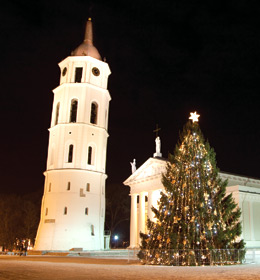
| International Migration Day |
IOM Vilnius (Jakšto 12, 4th floor) hosts Doors Open Days on 17-18 (Thu-Fri) December to celebrate International Migrantion Day. A newly published handbook for migrants “First steps in Lithuania” will be freely available for visitors. The handbook includes information on residency, work permits, social security, education, language education and other important issues. It is available in English, Russian, and Chinese. Foreigners are also encouraged to use this opportunity to meet IOM staff and discuss various issues and problems they might face in Lithuania. IOM also has a toll-free line 8-800-25252. “At the time of crisis migrants can easily become scapegoats for social problems that countries face. Our aim is to raise awareness of the rights they hold as migrants and help them feel more comfortable and welcome in Lithuania”, says Audra Sipavičienė, head of IOM Vilnius. At the moment IOM implements two integration projects for third country nationals. It also organises human trafficking prevention activities and assists migrants in returning home voluntarily. IOM is a non-political humanitarian inter-governmental organisation, which believes that regular and humane migration can benefit both migrants and societies. |
| National Culture and Art Awards |
On 11 December the annual National Culture and Art Awards were announced, and the presentations will take place on 16 February, Lithuanian Independence Day. Almantas Grikevičius, a director, was given a lifetime achievement award, director Jonas Rimgaudas Jurašas was awarded for the creation of a modern theatre language and the re-establishment of legend into contemporary Lithuania. Photographer Romualdas Rakauskas (pictured) was awarded for his photographic artistry, Marija Matušakaitė for the unveiling of authentic ancient Lithuanian art, Ramutė Skučaitė for unification of young and old through her literature and use of prose, Rolandas Kazlas, actor, for both his tragic and comedic theatre performances and creative principles. Each recipient will receive a prize of LTL104,000, a diploma from the President and a medal at a ceremony to be held at the Presidential Palace. |
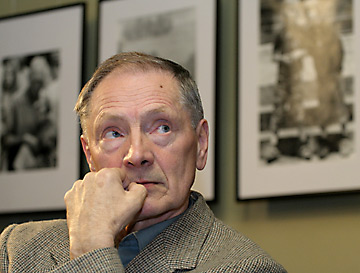
| Congress Latin-style |
The 13th World Lithuanian Youth Congress (WLYC or Kongresas) will take place in South America from 22 December 2009 to 7 January 2010. Delegates will meet with Lithuanian communities in Argentina, Uruguay and Brazil. The benefit of WLYC taking place outside of Lithuania is clear; they help not only strengthen the Lithuanian youth associations around the world that organise the event, they also help solidify the relationship with the host country’s Lithuanian community (Bendruomenė) and ensures the continued existence of a strong and vibrant Lithuanian community. The World Lithuanian Youth Congress is an extremely important event for Lithuanian youth living in the Diaspora, as it brings together representatives of all Lithuanian youth associations from around the world to discuss various topics relevant to today’s youth and is a forum to help one another deal with the unique challenges that various countries may face in uniting their groups. A new Executive Committee of the World Lithuanian Youth Association (PLJS) will be elected at this Kongresas, as well as the selection of the location of the next Kongresas. |
| Vortex hits Chicago |
Lithuanian film director Gytis Lukšas will present his new feature film “Duburys” (Vortex) at the Balzekas Museum of Lithuanian Culture on Saturday 19 December at 6:30 pm, 6500 South Pulaski Road, Chicago. Entrance is $10. The film is based on the novel by Romualdas Granauskas, winner of the Lithuanian National Cultural and Arts Award, and is the chronicle of a young man’s shifting relationships as he adjusts rather dramatically to the unfamiliarity of freedom. The film will be shown in Lithuanian with English subtitles. Duburys won the Silver Crane Award in Lithuania. It has been selected as Lithuania’s entry for this year’s Oscar nomination in the foreign language film category. Duburys was entered in the Montreal World Film Festival, Tallinn Black Nights Film Festival and has been invited to Cairo International Film Festival and the Museum of Modern Art in New York. |
| Be2gether in the running for Best Festival |
Music and art festival Be2gether nominated in the European Festival Awards 2009. It is the first Lithuanian festival nominated in the festival awards which is organized by Virtual Festivals Europe and festivals association Yourope since 2004. Be2gether is only three years old and is already nominated in Best Small Festival category – crowds of around 10,000. Festival fans can vote throughout December, and later a music industry juries will further rate the festivals. The winners will be announced on 13 January in Netherlands. Place your vote at: http://eu.virtualfestivals.com/index.cfm?section=euroawards&yearid=7 |
| Human Rights Awareness Month 2009: Artists for Human Rights |
In December, for the fifth year in a row, the Human Rights Monitoring Institute together with our partners organizes the Annual Human Rights Awareness Month to commemorate International Human Rights Day and encourage our society to live and act by human rights principles. There’s a powerful connection between artists of all kinds and human rights. Artists and activist sometimes stand up against the establishment to say what needs to be said in the name of humanity. Art communicates across the boundaries of geography, politics, gender and race. Human rights too, cross all divides and belong to every individual on the planet. Freedom of expression is vital for an artist’s work and human rights activist work to protect that very right. But in the end the relationship is more fundamental. We experience art together. It makes us feel human, and moves us to protect the human rights of others. (Amnesty International Magazine, July/August 2006) Events exploring the connection between art and human rights are popular all over the world – human rights art exhibitions, film festivals, video installations and public actions have been held in Australia, USA and many European countries. This year we decided to bring this theme to Lithuania, therefore we have Human Rights Awareness Month 2009: Artists for Human Rights. If you are feeling healthy you are most welcome to attend the events that we still have in our calendar (see below). However please take the necessary precautions. HUMAN RIGHTS AWARENESS MONTH 2009: 30 November 17:30 1 December 17:00 2 December 15:00 3 December 17:30 4 December 15:00 10 December 17:15 11 December 15:00 21 December 17:30 All Events of the Human Rights Awareness Month 2009 are free of charge. |
| Paper love replaces the beauties of Europe at Cozy |
In keeping with Cozy tradition, a new photographic feature adorning the walls of the Old Town café was opened recently. This time around it is the work of Amsterdam-based Lithuanian-born artist Inga Cholmogorova, whose shots of her performance together with a Belgian artist Sarah Benn in an abandoned Belgian factory form the basis of the work. Entitled Paper Love, the performance piece was improvised during the opening, using the surounds of Cozy rather than abandoned Belgian building, but Inga and Sarah were very pleased with the response and said that the universal themes of love are just as applicable here as in Western Europe. “The idea of the ‘paper love’ itself was quite intuitive working with the given space,” Inga said. “Already after creating the paper costumes and the whole performance I have realized that they remind us of something well known - Pierrot and Colombine, the characters of Commedia dell’Arte”. The artist also says that the clothes worn by her and Sarah were made out of paper to echo the delicate issues addressed in the work, such as the vulnerable nature of human emotions, relations and expectations as well as the ever-changing nature of material things. “I like the personality of Inga, I do like her work as well and I think the new pictures will contrast quite nicely with the exhibition of beauties we had before,” said Bernie Ter Braak, the owner of Cozy. The pictures from the performance Paper Love will stay in Cozy Spring 2010. There are also ‘fragments’ of Paper Love available in the form of postcards that you can send to family and friends from the café. |
Aleksandras Aleksejevas: Bronze Relief Icons |
3 – 24 December, 2009. “Sacred Space” gallery presents a solo exhibition by the Lithuanian artist Aleksandras Aleksejevas. Using bronze relief, a technique that he has studied in depth, and that was common in mediaeval and renaissance religious and secular art, but that has since fallen into comparative disuse, Aleksejevas demonstrates a profound mastery of his medium, to produce works that are surprisingly innovative, while still remaining true to the traditional iconographic canon. |
| Rimaldas Vikraitis - “Grimaces of the Weary Village” |
3 December 2009 – 16 January 2010. Anya Stonelake/White Space Gallery presents the first solo UK exhibition of Lithuania’s outstanding photographer, Rimaldas Vikraitis at John McAslan + Partners Architects Gallery. Championed by Martin Parr; Vikraitis won the Arles Discovery Award for New Photography in 2009. Vikraitis has been quietly pursuing his photography for years, cycling around the desolate farms in the Lithuanian countryside with his camera tied to his bike. Being compared with the British photographer Richard Billingham, he grew up “between marshes and clay” in one of the most secluded corners of the Lithuanian akiai district. “You couldn’t get out to the world without a large pair of wellingtons.” Vikraitis describes his subjects as “Bearing their cross and yet not grumbling over their lot.” Behind the backdrop of hilarity is the disintegration of a way of living, and persistence for survival. The resulting images are slightly insane and wonderfully surreal. Rimaldas Vikraitis graduated in Photography from the Vilnius Technical School. He worked for ten years as a photographer in akiai. He has been a member of the Union of the Lithuanian Art Photographers since 1985. Nominations: 2000/2002 and 2003/2004 a State Stipend from the Lithuanian Ministry of Culture. 2009 Arles Discovery Award, Arles Photofestival, France. Major photographic series include “Slaughter” (1982-86), “Nude in a Desolate Farm” (1991), A Meadow at 11.00 (1995), This Crazy World (1995-),Grimaces of the Weary Village (1998-), Farmstead Children (2000-), Farmstead Dreams (2000-). He is represented by Anya Stonelake/White Space Gallery in London. Supported by the Lithuanian Photographers’ Union, Kaunas Department, and the Ministry of Culture of the Republic of Lithuania. |
| U.S. Embassy Donates 1000 Books to Lithuanian Libraries to Mark Lithuania’s Millennium |
On Tuesday, December 1, US Ambassador Anne E. Derse and Lithuanian Minister of Culture Remigijus Vilkaitis participated in a book donation which took take place at Adomas Mickeviius Public Library (Trak 10, Vilnius). The project, “1000 Books for Lithuania’s Millennium,” began early this year, when employees of the US Embassy to Lithuania and their family members shared the titles of their favorite children’s books to be included into the collection. The entire set of one thousand books consists of new preschool and elementary-school children’s books purchased for the project. The collection is going to be presented to children’s literature departments of Lithuanian libraries, Adomas Mickeviius Public Library among them. The project aims to reach out to five different libraries throughout Lithuania, donating sets of 200 books to each. The total value of the donation exceeds $8,000. Native American Poets in Lithuania Four young poets from Navajo and Tohono O’odham tribes performed their original poems and Native songs in Vilnius and Kdainiai recently. Led by their coach and writer Timothy McLaughlin and the teacher of music Madi Sato, the young poets from the Spoken Word team of the Santa Fe Indian School, New Mexico, USA struck a chord with mesmerized Lithuanian audiences. |
| Hospitality Awards |
The second annual Vilnius Hospitality Awards were presented recently. Designed to lift the calibre of service in the Vilnius hospitality industry. Many of the awards were decided by customer feedback, and agencies and guides were judged by a commission. The competition ran for four months from 1 May to 30 September 2009 and awards presented at Vilnius Rotušė (Vilnius Townhall). Most Hospitable Large Hotel: Radisson BLU Astorija; Most Hospitable Mid Sized Hotel: Hotel Tilto; Most Hospitable Small Hotel: Hotel Grotthuss; Most Hospitable Restaurant: Neringa; Most Hospitable Café: Mano Guru; Most Hospitable Bar: Bar Bobo; Most Hospitable Music Club: Tamsta; Most Hospitable Museum: (joint winners) Contemporary Art Centre, and Energy and Technology Museum; Most Hospitable Guide: Laima Andrikytė; Most Hospitable Travel Agency: Baltic Travel Group; Most Hospitable Waiter or Waitress: Silvestras Pladas from Cozy; Most Hospitable Service Staff: Monika Agintaitė from Hotel Tilto. |

| Pasaka Cinemaboutique |
Below is a listing of the films playing at Pasaka Cinemaboutique during the next two weeks.
Tel: (85) 261 15 16 |

| Irish Cinema Days |
| Irish Cinema Days will be held from 20-22 November at the Lithuanian Filmmakers Union, corner Vasario 16-osios 13 and Šermukšnių 1. Three films will be screened: Saviours - A documentary following three young boxers from the Dublin boxing club, St Saviours. The Front Line - Joe Yumba, a musician from the Democratic Republic of Congo, receives the news he has been waiting for - his application for asylum has been successful. But Joe’s happiness is short lived. 32A - Semi-autobiographical story by director Marian Quinn set in Dublin during 1979 and depicts the “in-between” time of a girl’s life, whenshe is no longer a child and not yet a woman. The films will be screened in their original language with Lithuanian subtitles. Entrance is free. The festival is organised by the Embassy of Ireland in Vilnius, the Irish Film Institute “Reel Ireland” programme and the Lithuanian Filmmakers Union. |
| Tall Ships bid farewell to Klaipeda Sea Festival |
The Tall Ships’ fleet said its goodbyes to Klaipeda recently after four days of celebration during which over a million and a half people, a third of the population of Lithuania, visited the port. As the Tall Ships left the Lithuanian port city, many thousands of people lined the quaysides and the peninsula to wave to the ships as they left. The smaller vessels that had been moored inside the port made their way out into the bay first before Sedov (Russia), the first of the Class As to slip its moorings, blew her horn loudly to thank the crowds, and with the aid of two tugs made her way into the channel to lead the procession. The rest of the fleet followed, including Astrid (Netherlands) who sailed off her berth to the delight of the many assembled onlookers. |
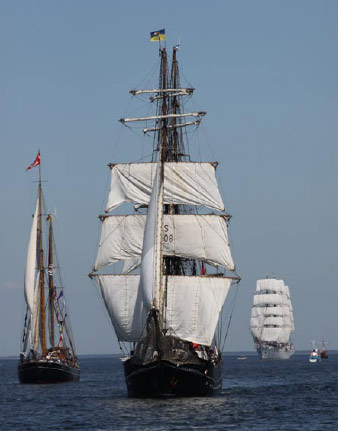
Ragenaite crowned Mrs Universe 2009 |
|
 |
Riga, Aug 10 (ELTA) - Lithuanian representative Vaida Ragenaite has been chosen the most beautiful woman in the competition Mrs. Universe 2009, which took place in Riga. According to the news portal lrytas.lt, the representatives of 20 countries participated in this competition. The second and third places were taken by the representatives of Belgium and Philippines. Ragenaite is to go to Vietnam in the end of the year to participate in the competition Mrs. World with the representatives of 50 other countries. * The editor notes with some interest that Vaida Ragenaite must now come back to conquer the world after being crowned Mrs. Univers. |